The counties where Americans never move
See more of our coverage in your search results.
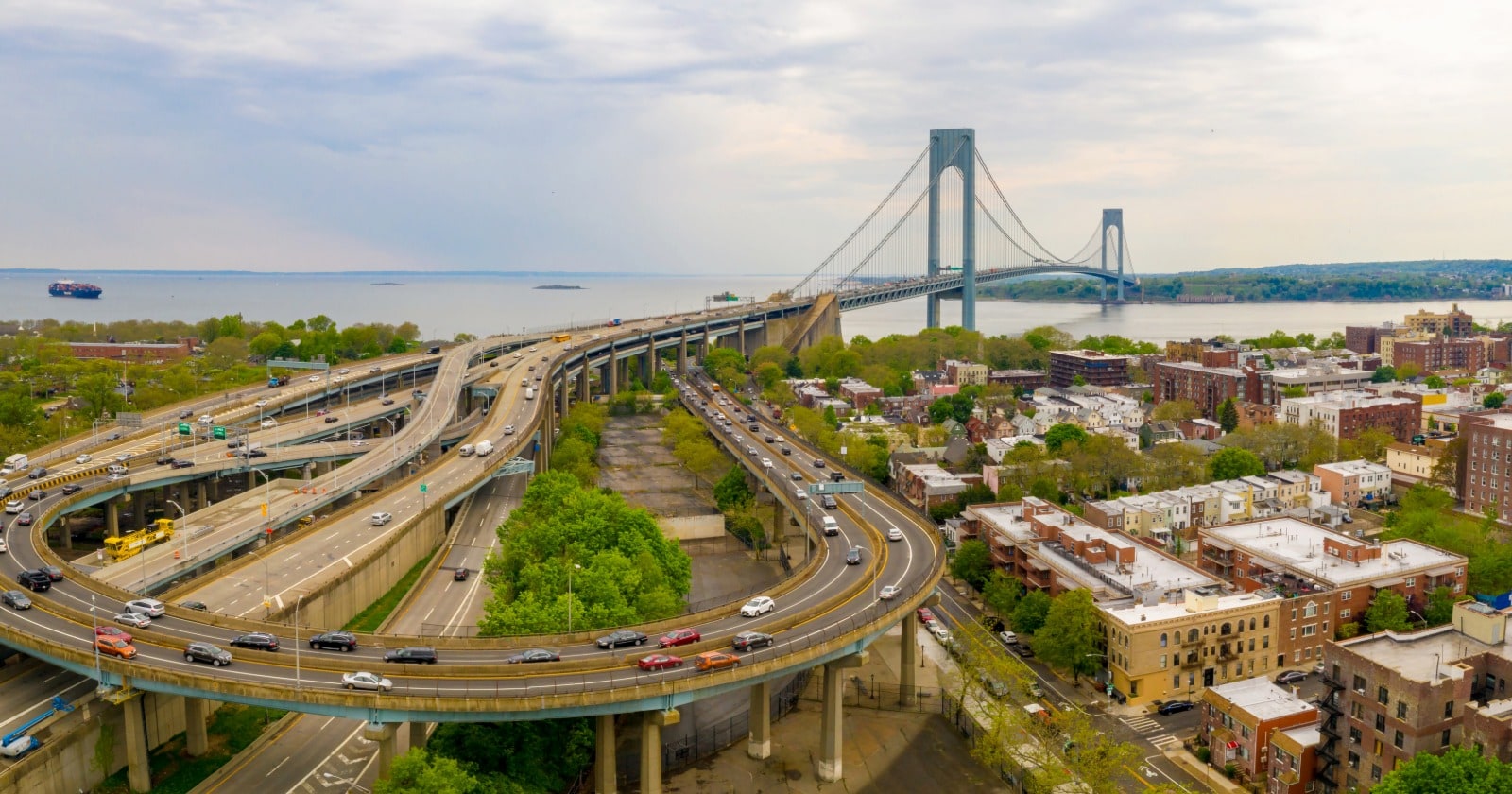
On Staten Island, 94.3 percent of residents were living in the same house a year ago. In Story County, Iowa, it's 71.4 percent. One in four people there moved within twelve months.
The census asks everyone a deceptively plain question: did you live in this house a year ago? The answer, mapped across the country, sorts American places into the ones people pass through and the ones people stay in for life.
The places nobody leaves
Richmond County, New York, which is Staten Island, has the most rooted population of any county over 100,000 people.
| County | Same house one year ago |
|---|---|
| Richmond County (Staten Island), NY | 94.3% |
| Robeson County, NC | 93.9% |
| Nassau County, NY | 93.5% |
| Carroll County, MD | 93.3% |
| Suffolk County, NY | 92.8% |
Four of the five counties are New York or Baltimore-area suburbs, and the reason is mostly housing math. These are expensive, heavily owner-occupied counties with older populations and low turnover. Once a household owns a home in Nassau County at a decades-old assessment, moving is a financial downgrade. So people don't.
Robeson County, North Carolina gets to the same number but from the opposite direction. It's one of the poorest counties in the state, with a large Lumbee population and deep multigenerational roots. People stay because family is there and because leaving takes more money.
The places everyone is passing through
The counties with the most turnover are almost entirely college towns.
| County | Same house | University |
|---|---|---|
| Story County, IA | 71.4% | Iowa State |
| Tompkins County, NY | 72.2% | Cornell |
| Monroe County, IN | 73.5% | Indiana |
| Clarke County, GA | 73.5% | Georgia |
| Brazos County, TX | 74.1% | Texas A&M |
Students move constantly, from dorm to apartment to a different apartment, and they turn over completely every four years. A county where a quarter of everyone moved last year is usually a county where a big share of everyone is 19.
These same counties show up at the bottom of our fertility rankings for the identical reason: the population is stacked with young adults who haven't settled into either houses or families yet. It's one demographic fact producing two very different-looking statistics.
Why this number is worth watching
American mobility has been falling for decades. The share of Americans who move in a given year is well under half what it was in the 1950s, and economists have linked that decline to housing costs, dual-income households that need two jobs in one place, and the rising cost of leaving a below-market mortgage or rent.
Low mobility isn't automatically good or bad. Stable neighborhoods keep institutions and relationships intact. They can also mean people are stuck, unable to move toward better work. When 94 percent of a county stays put, both things are usually happening at once, to different households.
Sources
Residential stability figures are the share of residents living in the same house one year earlier, from the U.S. Census Bureau American Community Survey 5-year estimates, table B07003, limited to counties with at least 100,000 residents. Because these are five-year estimates, they describe an average across recent years rather than a single year.
Add CensusEasy as a preferred source on Google to see our stories first.
 GENERAL
Black household income rises 76% since 1967, but dollar gap with White households widens
Census figures back to 1967 show Black median household income up 76.2 percent after inflation, to $59,980. The ratio to non-Hispanic White income narrowed, but the gap in dollars grew to $36,730.
 GENERAL
These U.S. counties have the highest housing vacancy rates, but they're not abandoned
Sixty-one percent of housing in Summit County, Colorado is vacant. That's Breckenridge, not a ghost town. Every county at the top of the vacancy list is a vacation destination.
 GENERAL
The area codes with the most people
Hawaii's 808 is the most populous area code covering a whole state, with 1.43 million residents. Arizona averages 1.5 million people per code. Here is every state's area codes and residents per code.
Which county has the most residents who never move?
Richmond County, New York, better known as Staten Island, leads all counties over 100,000 people, with 94.3 percent of residents living in the same house a year earlier. Robeson County, North Carolina follows at 93.9 percent, then Nassau County, New York at 93.5 percent.
Which counties have the most people moving?
College counties dominate. Story County, Iowa, home to Iowa State, has the most turnover, with only 71.4 percent of residents in the same house a year earlier. Tompkins County, New York (Cornell), Monroe County, Indiana (Indiana University), Clarke County, Georgia (Georgia), and Brazos County, Texas (Texas A&M) follow.
Why do people stay in some counties and leave others?
The reasons differ even when the numbers match. Expensive, heavily owner-occupied suburbs like Nassau County stay stable because moving would mean giving up a favorable mortgage or assessment. Poorer rural counties like Robeson stay stable because of deep family roots and the cost of leaving. College counties turn over because students move constantly and cycle out every few years.