These U.S. counties have the highest housing vacancy rates, but they're not abandoned
See more of our coverage in your search results.
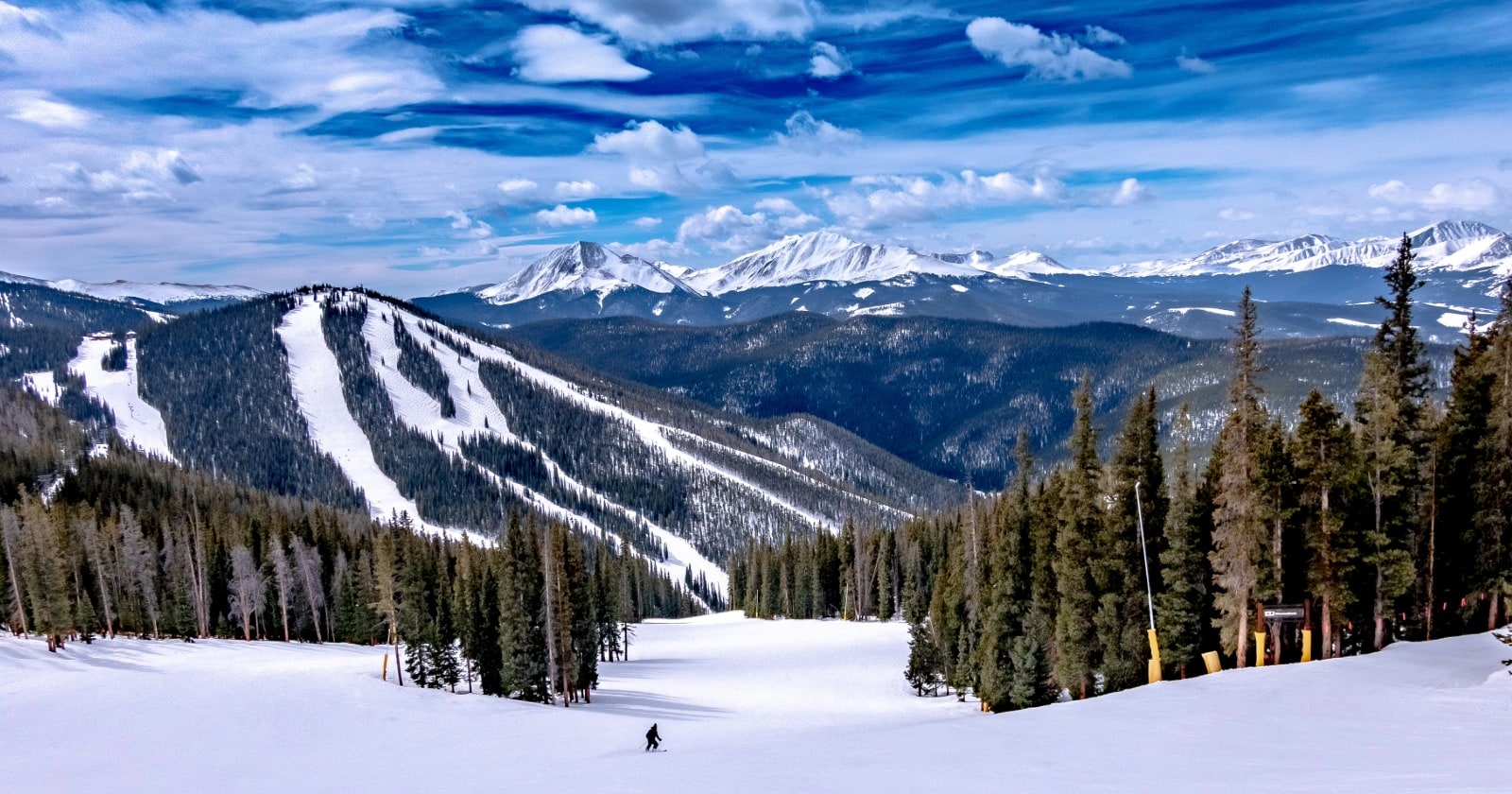
In Summit County, Colorado, 61 percent of housing units are vacant. That sounds like a place in collapse. It's Breckenridge, one of the most expensive ski markets in the country.
Vacancy is one of the most misread numbers the census publishes, because the word means something narrower than it sounds. A unit counts as vacant if nobody lives there as their usual residence. A ski condo occupied twelve weekends a year is vacant. A beach house that's full every July is vacant.
| Rank | County | Vacancy rate | What it is |
|---|---|---|---|
| 1 | Summit County, CO | 61.1% | Breckenridge ski country |
| 2 | Worcester County, MD | 57.6% | Ocean City |
| 3 | Dukes County, MA | 57.4% | Martha's Vineyard |
| 4 | Camden County, MO | 55.3% | Lake of the Ozarks |
| 5 | Vilas County, WI | 55.2% | Northwoods lake country |
| 6 | Cape May County, NJ | 54.9% | Jersey Shore |
| 7 | Dare County, NC | 52.3% | Outer Banks |
Every county at the top of this list is a vacation destination. Not one of them is an example of abandonment.
A high vacancy rate can mean two opposite things, and the census statistic alone won't distinguish them.
In resort counties, the empty units are second homes owned by people with money, and the consequence is a housing shortage rather than a surplus. In Summit County, more than half the housing stock has no full-time resident. High vacancy there is a symptom of demand, not weakness.
In declining industrial cities and rural counties losing population, empty units mean something else entirely: houses nobody wants, often deteriorating, dragging down the value of everything around them. Same number, opposite diagnosis.
The seasonal category is what separates them, and it's large. Of the 14.5 million vacant housing units in the country, 4.7 million, about a third, are held for seasonal, recreational, or occasional use. Anyone comparing vacancy rates without checking that split is comparing ski chalets to abandoned duplexes.
If you want vacancy as a market signal, the useful measures are narrower: the rental vacancy rate and the homeowner vacancy rate, which count only units actually available to rent or buy. Those run in the single digits nationally and are what economists watch, as in the quarterly figures we covered in the homeownership and vacancy report.
Total vacancy, the number in the table above, is better understood as a map of where Americans keep their second homes. Read that way, it's a fairly precise guide to the country's vacation geography: the Rockies, the Jersey Shore, the Outer Banks, Cape Cod and the islands, the Ozarks, and the northern lake country of Wisconsin and Minnesota.
It also has real fiscal consequences for those counties. A place where most homes sit empty most of the year still has to maintain roads, water systems, schools, and emergency services sized for peak season, funded largely by people who vote and pay income taxes somewhere else.
Sources
Vacancy rates are from the U.S. Census Bureau American Community Survey 5-year estimates, table B25002, and measure all housing units without a usual resident, including seasonal and recreational units. Counties shown have at least 20,000 residents. Rental and homeowner vacancy rates, which count only units on the market, come from the Housing Vacancy Survey and are much lower.
Add CensusEasy as a preferred source on Google to see our stories first.
 GENERAL
Black household income rises 76% since 1967, but dollar gap with White households widens
Census figures back to 1967 show Black median household income up 76.2 percent after inflation, to $59,980. The ratio to non-Hispanic White income narrowed, but the gap in dollars grew to $36,730.
 GENERAL
The area codes with the most people
Hawaii's 808 is the most populous area code covering a whole state, with 1.43 million residents. Arizona averages 1.5 million people per code. Here is every state's area codes and residents per code.
 GENERAL
The counties where most households earn six figures
About 53.3% of American households now earn $100,000 or more. In Loudoun County, Virginia it is 84.2%. Five of the top ten counties are in the Washington area.
Which US county has the highest housing vacancy rate?
Summit County, Colorado, home to Breckenridge, has the highest rate among counties with at least 20,000 residents, at 61.1 percent. Worcester County, Maryland, which contains Ocean City, follows at 57.6 percent, then Dukes County, Massachusetts, which is Martha's Vineyard, at 57.4 percent.
Does a high vacancy rate mean homes are abandoned?
Usually not. The census counts a unit as vacant if it has no usual resident, so second homes, ski condos, and beach houses all count even when they are used regularly. Roughly 40 percent of vacant units nationally are seasonal, recreational, or otherwise off the market. In resort counties, high vacancy signals strong demand and a shortage of housing for local workers.
What vacancy rate should you use to judge the housing market?
The rental vacancy rate and the homeowner vacancy rate, which count only units actually available to rent or buy. Those run in the single digits nationally and are what economists track. Total vacancy, including seasonal units, is better read as a map of where Americans keep second homes.