
Houston Overtakes Dallas as America's Fastest-Growing Metro
See more of our coverage in your search results.
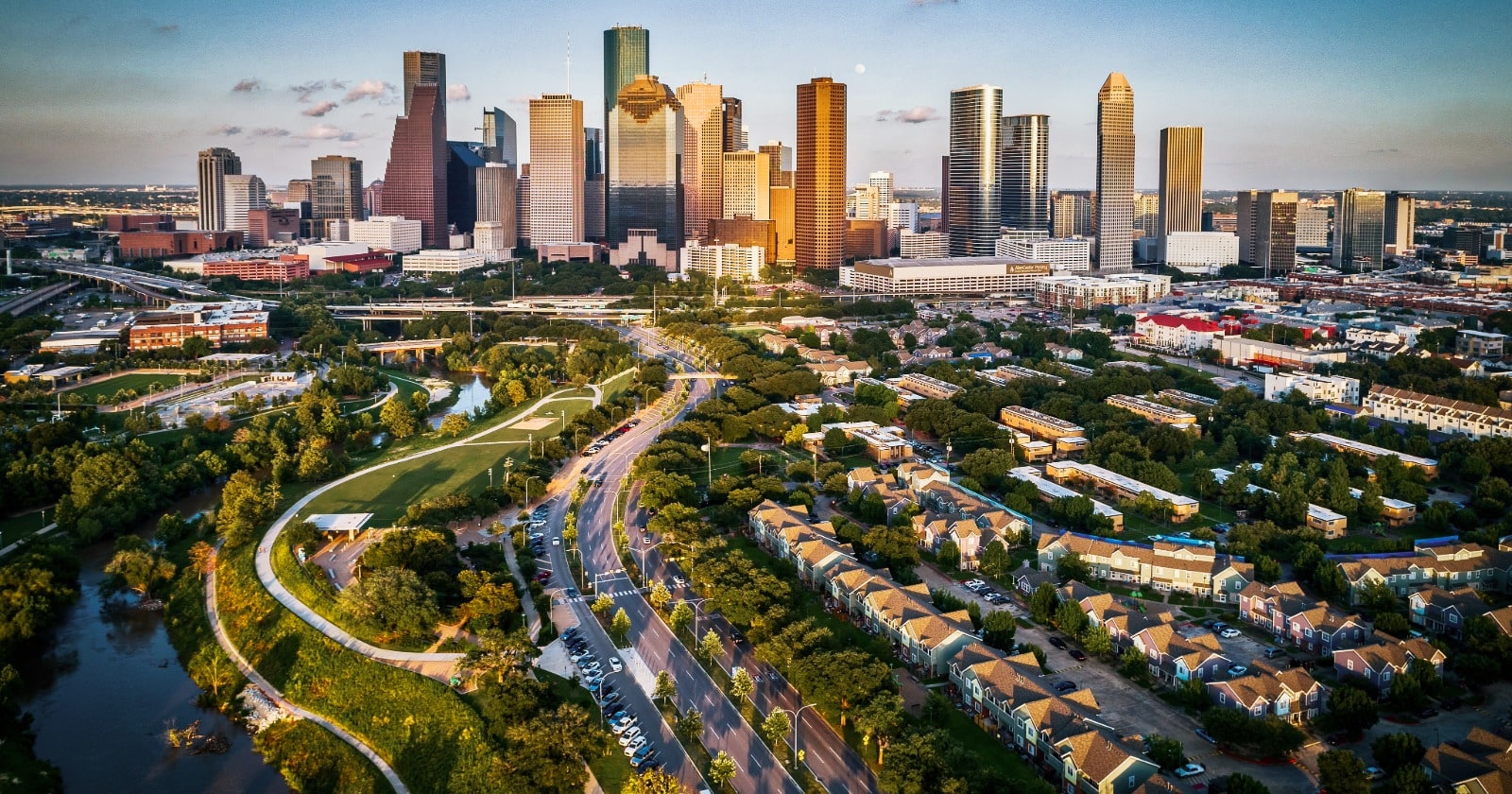
Houston added more people last year than any other metro area in the country. From July 2024 to July 2025 the 10-county Houston region gained 126,720 residents, edging out its in-state rival Dallas-Fort Worth, which added 123,557, according to the U.S. Census Bureau's Vintage 2025 population estimates. For a region that spent years chasing the Metroplex, it is a milestone: Houston is now the fastest-growing metro in America by the raw number of people it added.
The distinction matters. Smaller metros post higher percentage growth, but in sheer headcount the two big Texas metros lead the nation, and Houston edged ahead. As CultureMap reported, the region absorbed the equivalent of a city the size of Pearland in a single year.
The nation's biggest gainers
Here are the 10 U.S. metro areas that added the most people from 2024 to 2025.
| Rank | Metro area | Population, July 2025 | People added |
|---|---|---|---|
| 1 | Houston, TX | 7,904,627 | 126,720 |
| 2 | Dallas-Fort Worth, TX | 8,477,157 | 123,557 |
| 3 | Atlanta, GA | 6,482,182 | 61,953 |
| 4 | Phoenix, AZ | 5,228,938 | 59,065 |
| 5 | Charlotte, NC-SC | 2,938,830 | 54,122 |
| 6 | Austin, TX | 2,620,945 | 53,796 |
| 7 | Washington, DC-VA-MD-WV | 6,465,724 | 50,206 |
| 8 | Seattle, WA | 4,161,883 | 43,068 |
| 9 | San Antonio, TX | 2,813,140 | 38,402 |
| 10 | Orlando, FL | 2,957,672 | 37,690 |
Four of the top 10 are in Texas. The Houston metro's population reached 7,904,627 in July 2025, up 1.6 percent in a year, and it is closing in on 8 million. Over the last two decades the region has grown 39 percent, and forecasts from the Texas Demographics Center put it near 8.5 million by 2030.
Harris County is a heavyweight
Harris County, which contains the city of Houston, accounted for nearly 40 percent of the region's gain. It added 48,695 people in a single year, a 1 percent increase that pushed its population past 5 million and gave it the largest numeric growth of any county in the United States. Harris is now the nation's third-largest county, behind Los Angeles County and Cook County in Illinois, and it is closing a gap of roughly 150,000 residents with the shrinking Cook County.
The suburbs did the rest, and then some. Fort Bend County reached 975,191 and is projected to pass 1 million by 2030. Montgomery County added 30,011 people to reach 781,194, the fourth-largest numeric gain of any U.S. county. And two smaller counties posted some of the fastest percentage growth in the country: Waller County grew 5.69 percent, the second-fastest rate of any U.S. county, and Liberty County grew 4.4 percent.
What is driving it, and what could slow it
Dan Potter, who directs Rice University's Houston Population Research Center, attributes much of the surge to people arriving from outside the country, including returning military personnel, Americans coming back from abroad, and immigrants relocating to the U.S. Domestic movers, by contrast, increasingly skip Harris County for the surrounding suburbs. "The incredible pull and attraction of the Houston area is its economy, its people, and its affordability," Potter told CultureMap.
He also sees headwinds. Growth slowed in 2025 and appears to be slowing further this year, which Potter ties to a cooling economy and shifts in immigration policy. The region added a smaller-than-expected 14,800 jobs in 2025. If international arrivals flatten, he warns, the metro could see "doughnut-style" growth, with Harris County and the city flat or declining while the outer counties keep gaining. Pramod Sambidi of the Houston-Galveston Area Council credits the suburban pull to affordability, remote work, and a wave of new multifamily construction.
You can track how any metro or county is growing on the fastest-growing metros and fastest-growing counties rankings, compare Houston and Dallas directly with the compare tool, or read how the Metroplex built its lead in how Dallas-Fort Worth added 4.5 million people.
Sources
Reporting: John Egan for CultureMap Houston (March 30, 2026), with quotes from Dan Potter of Rice University's Houston Population Research Center, Pramod Sambidi of the Houston-Galveston Area Council, and projections from the Texas Demographics Center. Primary data: the U.S. Census Bureau Vintage 2025 Population Estimates.
Add CensusEasy as a preferred source on Google to see our stories first.
 BOOMTOWNS
The Fastest-Growing Counties in Texas, 2024 to 2025
Texas added 391,243 residents in a single year. Harris County led in raw numbers, but the fastest growth was in the exurban collar counties, with Kaufman County landing near the top of both the numeric and percentage rankings.
 BOOMTOWNS
Atlanta vs. Charlotte: The Southeast's Two Biggest Growth Stories
Atlanta and Charlotte are the two cities that defined the Southeast's rise as an economic region over the past 35 years. Both started the 1990s as mid-sized Southern cities with regional profiles and have grown into nationally significant metros with Fortune 500 headquarters, major financial sectors, and...
 BOOMTOWNS
How Texas's Population Has Changed Since 1990
Texas added more residents in 2024 than any other state in the country. It has done so in most years since 1990. The current Texas...
What is the fastest-growing metro area in the U.S.?
By the number of people added, the Houston metro led the nation in 2025, gaining 126,720 residents from July 2024 to July 2025, just ahead of Dallas-Fort Worth's 123,557, according to Census Bureau estimates.
What is the Houston metro area's population?
About 7.9 million (7,904,627) as of July 2025, up 1.6% from a year earlier, and on track to pass 8 million soon.
Which Houston-area counties are growing fastest?
Harris County added the most people (48,695) and passed 5 million. Fort Bend County neared 1 million, Montgomery County reached 781,194, and Waller County grew 5.69%, the second-fastest rate among U.S. counties.