
How Dallas-Fort Worth Added 4.5 Million People in 35 Years
See more of our coverage in your search results.
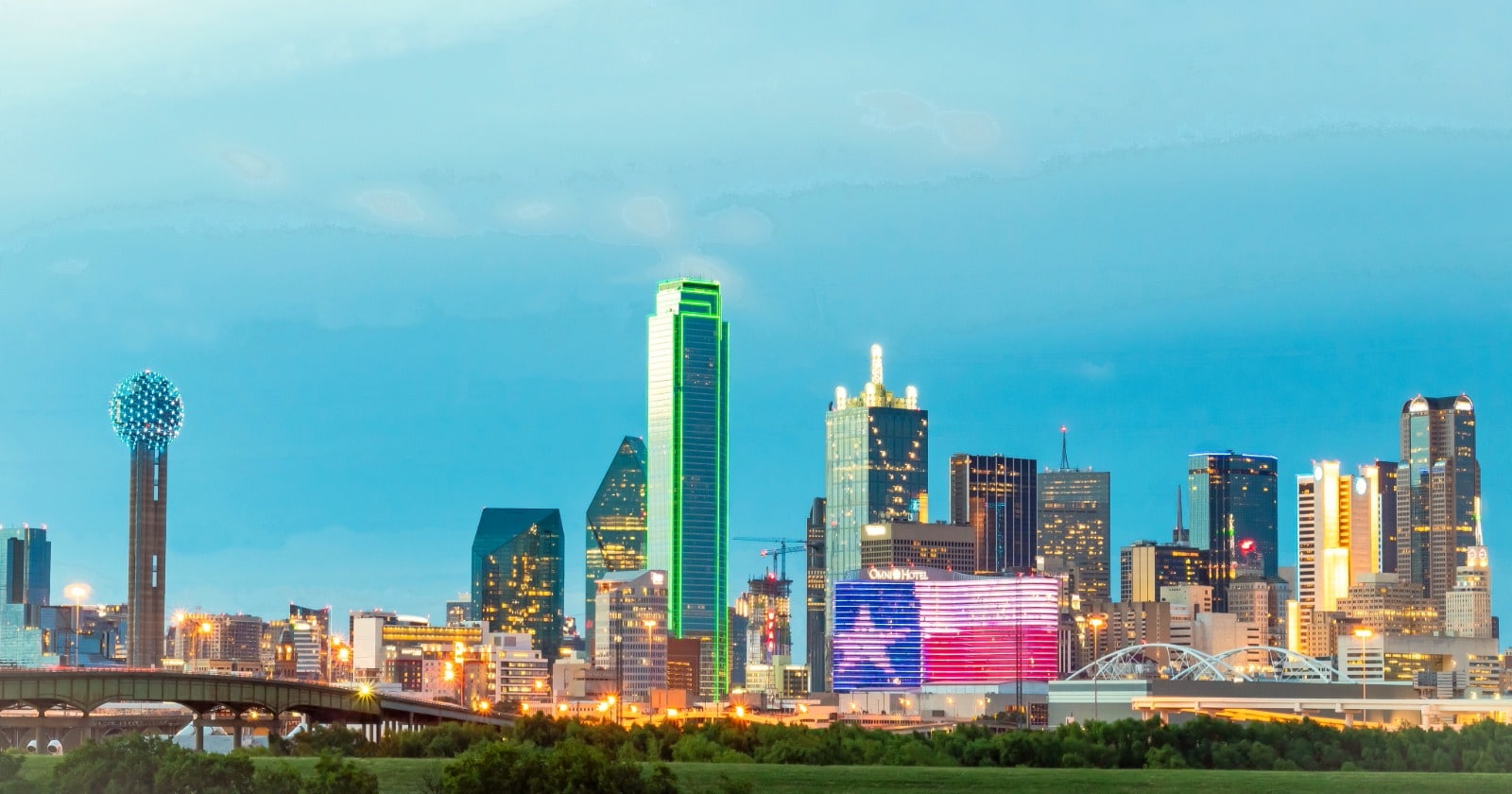
In 1990, the Dallas-Fort Worth metro area had just under 4 million residents. Today it has 8.5 million. That's not a typo, and it's not a story about one fast decade followed by a plateau. The Dallas metro has added people in every single decade since 1990, at a pace that has no real parallel among large American metros. It added more than a million people in the 1990s, more than a million in the 2000s, more than a million in the 2010s, and it's on pace to add another million before 2030. The full data tells the story of a metro that turned a regional economy into a national one in roughly one generation.
The numbers decade by decade
The 1990 starting point was a metro of 3,984,437 people with a median household income of $32,937 and a median home value of $77,325. The Dallas-Fort Worth area was already a significant metro at that point, the ninth largest in the country, but it was still viewed primarily as a regional center for Texas and the Southern Plains rather than a national destination for corporate relocations and high-skilled migration.
By 2000, the population had grown to 5,156,217, adding 1.17 million people in a single decade. Median household income had risen to $48,311 and median home value had nearly crossed six figures at $98,325. The 1990s were the decade when the DFW economy diversified beyond its oil and real estate roots into telecommunications, financial services, and technology. Companies like Texas Instruments, AT&T, and American Airlines were anchors of a growing corporate base that started pulling white-collar workers from other metros.
The 2010 data shows a metro of 6,366,542, another 1.2 million added through a decade that included the worst financial crisis since the Great Depression. That the DFW metro grew through the 2008-2009 recession while most large metros stagnated or shrank reflects something structural about the local economy: no state income tax, a business-friendly regulatory environment, and land supply that kept housing costs low enough to absorb new residents without pricing out the workforce. Median household income reached $57,669 and median home value $144,913 by 2010, both figures reflecting a metro that had absorbed significant growth without the housing cost explosion that accompanied growth in coastal metros.
Between 2020 and today, the pace has actually accelerated rather than slowed. The metro hit 7,637,387 by 2020 and has since grown to 8,477,157, adding nearly 840,000 people in roughly four years. Median household income has reached $92,044 and median home value has climbed to $353,895. The home value number represents the most dramatic shift in the metro's economic character: DFW's affordability advantage over coastal markets still exists, but it has narrowed significantly since 2020 as remote workers from California, New York, and the Pacific Northwest repriced the market with equity from home sales in cities where $353,000 wouldn't buy a starter home.
Where the growth actually landed
The 4.5 million people who moved to DFW between 1990 and today did not move to Dallas or Fort Worth. They moved to the suburbs, and specifically to the northern suburbs along the Dallas North Tollway corridor and the suburbs south and west of Fort Worth. Frisco, McKinney, and Plano absorbed enormous shares of the growth and are now cities of 100,000 to 230,000 people with their own employment bases, retail districts, and identities that don't depend on proximity to downtown Dallas.
Arlington, Irving, and Garland represent an older ring of suburbs that were built out in the 1970s and 1980s and have since evolved into diverse, working-class and middle-class cities with their own demographic stories. Arlington's population has crossed 400,000, making it one of the largest cities in the country without a commercial rail transit system, a distinction that reflects how thoroughly DFW's growth has been organized around the car and the highway rather than transit infrastructure.
The city of Dallas itself grew from 1,006,877 in 1990 to roughly 1.3 million today, meaningful growth but a small fraction of what the metro added overall. The core city's share of metro population has actually shrunk over the period, from about 25% in 1990 to roughly 15% today. Dallas is growing, but the suburbs are growing faster, and the suburbs further out are growing fastest of all.
What drove it
Three things explain why DFW grew when and how it did, and they reinforce each other in ways that make the growth self-sustaining rather than dependent on any single factor.
The first is cost. Texas has no state income tax, and DFW's land supply has historically been large enough to keep housing affordable relative to coastal alternatives. A corporate executive relocating from Chicago or Los Angeles in 2005 could buy a larger house in a better school district for significantly less money and pay lower taxes on both income and property. That math attracted corporate relocations, which attracted workers, which attracted more retail and services, which made the metro more appealing to the next wave of corporate relocations.
The second is corporate infrastructure. The DFW airport, which opened in 1974 and became one of the busiest in the country by the 1990s, gave the metro direct connections to every major city in the world. Companies that needed to be accessible to both coasts and to international partners found DFW's central location and air connectivity genuinely valuable. The concentration of corporate headquarters, from Toyota and Charles Schwab to AT&T and American Airlines, created a professional services ecosystem of law firms, accounting firms, and financial advisors that further anchored high-earning employment in the metro.
The third is climate. It's worth being honest about this one. Summers in Dallas are brutal, with July temperatures regularly exceeding 100 degrees and extended drought conditions that have become more severe over time. But the winters are mild, and for migrants from the Midwest and Northeast, the trade of shoveling snow for running an air conditioner has historically looked favorable. Whether that calculus holds as summers get longer and hotter is one of the more interesting questions about DFW's next decade of growth.
What 8.5 million people looks like in the data
The current snapshot of the Dallas-Fort Worth metro is a place with a median household income of $92,044, a poverty rate of 10.5%, and a median age of 35.6 years. That median age is the youngest on this list of any large metro in the country, reflecting the combination of a high birth rate in the metro's large Hispanic population and a steady stream of young workers relocating for jobs. A metro that keeps pulling in people in their late 20s and early 30s compounds its growth advantage because those residents are at the beginning of their household formation and earning years.
The poverty rate of 10.5% is below the national average, which is notable for a metro of this size and demographic diversity. It reflects a labor market that has maintained low unemployment through most of the past three decades, even during national recessions that hit other large metros harder. The metro's poverty rate has actually declined from 11.8% in 1990 despite absorbing millions of new residents, many of them arriving with limited resources and building wealth over time in a market that historically offered upward mobility through homeownership and steady employment.
The home value story is the most complicated. The median of $353,895 represents a 357% increase from 1990's $77,325 in nominal terms. Adjusted for inflation that's still a real increase of roughly 130%, which means DFW homeowners have built genuine real wealth over the period. But it also means the affordability advantage that drove so much of the growth has been partially consumed by the growth itself. The gap between DFW and coastal markets still exists but is smaller than it was in 2015, and for lower-income workers the metro is no longer the accessible housing market it once was.
You can explore the full time series on the Dallas metro page and compare it against any other metro using the Compare tool.
Add CensusEasy as a preferred source on Google to see our stories first.
 TIME-MACHINE
The most common first names in America
Michael passed James to become the most common man's name in the country, and Maria climbed from seventh to second among women. Every name on both lists peaked decades ago, which is exactly what you'd expect once you know what the data is counting.
 TIME-MACHINE
How Osceola County went from 81% White to become Majority Hispanic
Osceola County, Florida, anchored by Kissimmee, was 81 percent white in 1990. Today it is 56 percent Hispanic.
 TIME-MACHINE
America Turns 250: A Portrait of the Nation, From 1790 to Today
As the United States marks its 250th birthday on July 4, 2026, here is how the nation changed from the first census of 1790, when it counted 3.9 million people in 13 states, to today's 335 million across 50.
How much has Dallas-Fort Worth grown since 1990?
Dallas-Fort Worth grew from just under 4 million residents in 1990 to about 8.5 million today, adding roughly 4.5 million people in one generation.
Why did DFW grow so quickly?
DFW grew quickly because it combined no state income tax, relatively affordable land, major corporate relocations, DFW Airport connectivity, and steady job growth.
Where did most Dallas-Fort Worth population growth happen?
Most of the growth landed in the suburbs, especially places like Frisco, McKinney, Plano, Arlington, Irving, Garland, and the fast-growing outer suburban corridors.