
America Turns 250: A Portrait of the Nation, From 1790 to Today

See more of our coverage in your search results.
On July 4, 2026, the United States turns 250. When the Declaration of Independence was signed in 1776, the country was home to roughly 2.5 million people. When the government first counted everyone in 1790, it found 3,929,214. Today the same nation holds about 335 million people across 50 states. A quarter of a millennium is a long time to watch a country grow, and the census has been keeping the record for almost all of it.
The nation the first census found
The first U.S. census, taken in 1790, counted 3,929,214 people across the 13 original states and the Southwest Territory, the northeastern corner of what is now Tennessee. According to the record of that census, only two cities, New York and Philadelphia, had more than 25,000 residents. New York, the largest, had just 33,131 people, roughly the size of a small suburb today. About 95 percent of Americans lived outside of cities, on farms and in small towns clustered along the Atlantic coast, and the typical household held nearly six people.
The count also recorded something no modern census does. Of those 3.9 million people, 3,231,533 were free and 697,681 were enslaved, 17.8 percent of the population and the highest share ever recorded in a U.S. census. Enslaved people were counted because the Constitution required it: seats in Congress were apportioned under the three-fifths clause, which counted each enslaved person as three-fifths of a free person. Slavery was written into the very first measurement of the country.
1790 and today, side by side
The scale of the change is easiest to see all at once.
| Rank | Measure | 1790 | Today |
|---|---|---|---|
| 1 | Total population | 3,929,214 | 334,922,499 |
| 2 | States | 13 | 50 |
| 3 | Largest city | 33,131 (New York City) | 8,584,629 (New York City) |
| 4 | Share living in cities | about 5% | about 80% |
| 5 | People per household | nearly 6 | about 2.5 |
| 6 | Seats in the U.S. House | 105 | 435 |
| 7 | Life expectancy (1776) | 35 to 38 | 79 |
The largest city in both columns is New York, which has topped every census since the first one. In 1790 it held 33,131 people. Today New York counts 8,584,629, more than 250 times as many and more than twice the size of the entire country in 1790.
The country's center kept moving west
One number captures the sweep of American settlement better than almost any other. The Census Bureau calculates the nation's mean center of population, the point where a flat map of the country would balance if every resident weighed the same. In 1790 that point sat in Kent County, Maryland, near the Atlantic. By 2020 it had moved about 886 miles west and south, to near Hartville, Missouri, a town of 594 people. Each decade the balance point shifts a little further from the coast, and the trail it leaves is the story of the frontier, the great migrations, and the rise of the Sun Belt drawn as a single line across the map.
250 years of growth
Since 1776 the population has multiplied more than 130 times, according to a Reader's Digest comparison of 1776 and today. Almost every decade of that growth is visible in the census, which is why you can follow the whole arc in our timeline of U.S. population from 1790 to today. The country passed 76 million by 1900, crossed 150 million around 1950, and reached 331 million at the 2020 census. The House of Representatives grew with it, from 105 seats after the first census to the 435 fixed in law today, one of the few numbers on this page that stopped rising.
The map filled in as the numbers rose. The 1790 population sat on the Atlantic seaboard; today the country stretches coast to coast, and its center of gravity has swung to the South and West. The fastest-growing states now are Idaho, up 5.2 percent, followed by Florida, Utah, Texas, and South Carolina. The 13 coastal colonies of 1790 have become a nation whose growth engine runs through the Sun Belt.
Who Americans are at 250
The country the census describes today would be unrecognizable to a 1790 marshal. The population stands at 334,922,499 in the latest estimates on this site, spread across 50 states. California alone holds 39,287,377 people, ten times the entire nation of 1790, while the smallest state, Wyoming, has 582,397. The median household income is $82,259, and the median age is 38.9 years. The country is also the most diverse it has ever been, a long way from the census that sorted people into just a few columns, as the most diverse cities rankings show. You can see the full national profile at a glance.
Longer lives, an older country
One number captures the human change as well as any. In 1776 the average life expectancy was 35 to 38 years. Today it is about 79, an all-time high reached in 2024, according to the same 1776-versus-today comparison. Clean water, vaccines, better nutrition, and modern medicine roughly doubled the American lifespan over 250 years.
That longer life has an obvious side effect: the country is older than it has ever been. The median age of 38.9 keeps climbing, and the census now records more Americans past retirement age than at any point in the nation's history. A country that was young, rural, and packed six to a household in 1790 is older, overwhelmingly urban, and living about 2.5 people to a home in 2026, and the same count that found 3.9 million farmers now tracks a 335-million-person society. For a look at where that trend goes next, see our post on what the U.S. population will be in 2050.
A count that keeps going
The 250th birthday is a milestone for the census as much as for the country. The America250 commission, the nonpartisan body Congress created to plan the anniversary, has set a goal it calls "350 for 250," reaching all 350 million Americans by the celebration. The next full census, in 2030, will draw the next portrait. For now you can explore how any state, county, city, or metro has changed over the decades, or compare two places side by side, with the compare tool.
Sources
The 1790 figures, including the population, the largest-city and urban shares, household size, and the enslaved population, come from the record of the 1790 United States census and the U.S. Census Bureau history archive. The mean center of population is from the U.S. Census Bureau center of population files, and House apportionment history from the Census Bureau apportionment archive. The 1776-versus-today population and life-expectancy comparison is from Reader's Digest. Anniversary context is from America250 and the United States Semiquincentennial record. Modern population, income, and age figures are from the U.S. Census Bureau American Community Survey and population estimates, as carried on CensusEasy.
Add CensusEasy as a preferred source on Google to see our stories first.
 TIME-MACHINE
The most common first names in America
Michael passed James to become the most common man's name in the country, and Maria climbed from seventh to second among women. Every name on both lists peaked decades ago, which is exactly what you'd expect once you know what the data is counting.
 TIME-MACHINE
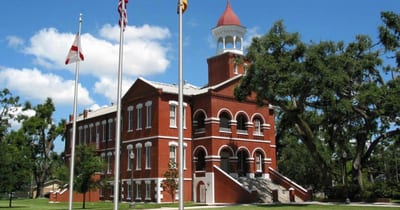
How Osceola County went from 81% White to become Majority Hispanic
Osceola County, Florida, anchored by Kissimmee, was 81 percent white in 1990. Today it is 56 percent Hispanic.
 TIME-MACHINE
How Big Was America? US Population in 1900, 1945, 1990, and Today
From 76 million in 1900 to nearly 335 million today, the US grew more than fourfold. We walk the milestones and explain what era each number marks.
When is America's 250th birthday?
July 4, 2026 marks 250 years since the Declaration of Independence was signed in 1776. The anniversary is called the Semiquincentennial.
What was the U.S. population in 1790?
The first U.S. census counted 3,929,214 people across the 13 states and the Southwest Territory. Today the country has about 335 million people across 50 states.
How much has the U.S. population grown since 1776?
From about 2.5 million at the signing of the Declaration of Independence to roughly 335 million today, an increase of more than 130 times.