
How Florida's Population Changed Since 1990

See more of our coverage in your search results.
Florida has added more than 9.4 million residents since 1990, growing from 12.9 million to 22.4 million. It passed New York to become the third most populous state in 2014 and has not slowed down since. The state that was already a retirement and tourism destination in 1990 has become something much broader: a magnet for working-age families, remote workers, international immigrants, and businesses relocating from higher-tax states. The Census data captures a transformation that has reshaped not just Florida's size but its entire demographic character.
The 1990s: steady growth on the retirement model
Florida in 1990 had 12,937,926 residents, a median household income of $27,483, and a median home value of $76,500. The state's median age of 36.5 was already above the national average, reflecting the retiree population that had been moving to Florida since the postwar decades. The growth model of the early 1990s was familiar: Northerners retiring to the Gulf Coast and Atlantic Coast, drawn by warm weather, no state income tax, and relatively affordable housing.
The state grew to 15,982,378 by 2000, adding roughly 3 million residents in the decade. Median household income rose to $38,819 and home values climbed modestly to $93,200. The metros that would define Florida's later growth were already expanding: Orlando was building out around its theme park economy, Tampa was growing as a business and healthcare center, and Miami was solidifying its position as the financial and cultural capital of Latin America.
The 2000s: the housing bubble and bust
The decade from 2000 to 2010 added 2.8 million residents, bringing Florida to 18,801,310. But the headline population number obscures the most dramatic economic event of the decade: the housing bubble and its collapse. Florida home values, which had reached $205,600 by 2010, had spiked far higher at the 2006 peak before crashing harder than almost any other state during the 2008 financial crisis.
Florida was the epicenter of the speculative housing boom. Easy credit, rampant condo construction, and speculative buying drove prices to unsustainable levels, particularly in Miami, Cape Coral, and the coastal markets. When the bubble burst, Florida led the nation in foreclosures, and the population growth that had been partly fueled by construction jobs and real estate speculation slowed sharply in the immediate aftermath. The state's growth never stopped entirely, but the 2008 to 2011 period was the weakest stretch of in-migration Florida had seen in decades.
The 2010s: recovery and reinvention
Florida recovered from the housing crash and grew from 18,801,310 in 2010 to 21,538,187 in 2020, adding 2.7 million residents. The recovery brought a subtle shift in who was moving to Florida. The state was no longer just a retirement destination. It was increasingly attracting working-age professionals and families, drawn by the same no-income-tax advantage that appealed to retirees but now made possible for younger workers by the early stages of remote work and by corporate relocations to the Miami and Tampa metros.
Median household income rose from $47,661 in 2010 to $57,703 in 2020, and home values recovered to $232,000. The median age held roughly steady at 43.0, which is notable: despite the influx of working-age migrants, Florida's continued draw for retirees kept the state's age profile among the oldest in the country.
The pandemic surge: 2020 to today
Florida's growth accelerated dramatically during and after the COVID-19 pandemic. The state grew from 21,538,187 in 2020 to 22,416,077 by the most recent ACS count, and the migration that drove that growth was different in character from anything in the state's prior history. Remote work, Florida's relatively loose pandemic restrictions, and the no-income-tax advantage combined to pull a wave of high-earning professionals and businesses from New York, California, Illinois, and New Jersey.
The income data reflects the shift. Florida's median household income jumped from $57,703 in 2020 to $74,568 today, a 29% increase in four years that far outpaces inflation and reflects the higher earnings of the pandemic-era migrants. Median home value surged from $232,000 to $359,000 over the same period, a 55% increase that has made affordability a genuine crisis in markets that were affordable just five years ago.
The Miami metro reached 6,391,072 residents by the 2025 estimate. The Tampa metro hit 3,418,895 and the Orlando metro reached 2,957,672. The city of Jacksonville crossed 1 million residents to reach 1,017,689, making it the most populous city in the state and one of the largest by land area in the country.
The fast-growing mid-sized cities
Some of Florida's most dramatic growth has happened in mid-sized cities that were modest in 1990. Cape Coral on the Gulf Coast has reached 236,264 residents by the 2025 estimate, growing from a fraction of that size in 1990 through one of the most aggressive planned-community buildouts in the country. Port St. Lucie on the Treasure Coast reached 268,062, transforming from a small town into one of Florida's largest cities in a single generation. These cities absorbed the families and retirees who wanted Florida's lifestyle without Miami's prices, and they have median household incomes around $78,000 to $80,000 that reflect a solidly middle-class migrant population.
The demographic shifts underneath the growth
Florida's growth has changed its demographic composition significantly. The Hispanic population has grown dramatically, driven both by immigration from Latin America and the Caribbean and by domestic migration of Hispanic households from other states. Miami-Dade County, with a population of 2,802,029, is majority Hispanic and functions as one of the most internationally connected counties in the United States, with deep ties to Cuba, Venezuela, Colombia, and across Latin America.
The state has also become more economically unequal as it has grown wealthier on average. The pandemic-era migration brought high earners who bid up housing costs, while the service workers who staff Florida's tourism and hospitality economy have been increasingly priced out of the coastal markets. Florida's poverty rate of 12.6% is near the national average, but it masks significant variation between the wealthy coastal enclaves and the inland and rural areas that have not shared in the boom.
What the 35-year arc shows
Florida in 1990 was a retirement state with 12.9 million residents and a median home value of $76,500. Today it is a 22.4 million resident economic powerhouse with a median home value of $359,000 and an income profile that has risen sharply with the arrival of high-earning migrants. The state added the equivalent of an entire New Jersey to its population in 35 years, weathered the worst housing crash in the country, and emerged as one of the primary destinations in the post-pandemic reshuffling of where Americans live and work.
The growth has not been cost-free. Housing affordability, insurance costs driven by hurricane and flood risk, and the strain on infrastructure and water resources are real challenges that the population numbers alone do not capture. But the directional story is unambiguous: Florida has been one of the great population growth engines of modern America, and the trajectory shows little sign of reversing.
You can explore Florida's full time series from 1990 to today and compare any city, metro, or county to the statewide trend on the Florida state page, or use the Compare tool to put Florida directly against Texas, California, or any other state.
Add CensusEasy as a preferred source on Google to see our stories first.

The most common first names in America
Michael passed James to become the most common man's name in the country, and Maria climbed from seventh to second among women. Every name on both lists peaked decades ago, which is exactly what you'd expect once you know what the data is counting.
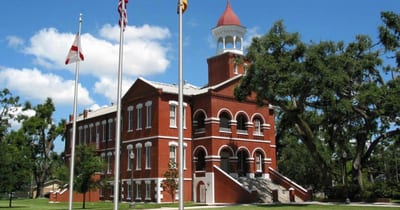
How Osceola County went from 81% White to become Majority Hispanic
Osceola County, Florida, anchored by Kissimmee, was 81 percent white in 1990. Today it is 56 percent Hispanic.

America Turns 250: A Portrait of the Nation, From 1790 to Today
As the United States marks its 250th birthday on July 4, 2026, here is how the nation changed from the first census of 1790, when it counted 3.9 million people in 13 states, to today's 335 million across 50.
How has Florida changed since 1990?
Florida has grown from 12.9 million residents in 1990 to about 22.4 million today, adding more than 9.4 million people. It has also shifted from being mostly a retirement and tourism destination to a broader economy that attracts working-age families, remote workers, immigrants, and businesses relocating from higher-tax states.
What happened to Florida during the 2000s?
Florida kept growing in population during the 2000s, but the decade was dominated by the housing bubble and its collapse. Home values rose sharply before the 2008 crash, foreclosures surged, and growth slowed during the worst of the bust.
Which Florida cities have grown the most?
Miami, Tampa, Orlando, Jacksonville, Cape Coral, and Port St. Lucie have all grown dramatically. Jacksonville crossed 1 million residents, and mid-sized cities like Cape Coral and Port St. Lucie transformed from much smaller places into some of the state's largest cities.