Election night results show that Americans hate data centers
See more of our coverage in your search results.
Voters in 35 communities across eight states voted against data centers on November 3. Opponents won 38 of the 39 local data center measures decided so far, according to unofficial results from county election offices. The measures ranged from outright bans and moratoriums to advisory questions asking whether residents wanted data centers at all. In most places, it wasn't close.
Ohio had the most votes on the ballot. Every one of its 19 data center measures went against development. In Granville, 82 percent of voters approved a ban. In Trenton, a ban aimed at an 18-building Amazon Web Services project passed with 80 percent. Voters in Wilmington rejected four rezonings for a data center project, each by about 80 percent, and Ashville voters turned down a preliminary agreement between the village and developer EdgeConneX, 1,469 to 331.
Alhambra, California, a city of almost 80,000, banned data centers with 82 percent of the vote. In Illinois, advisory questions lost by wide margins in four townships in Madison County and in Joliet Township in Will County, where 79 percent said no to AI data center construction. Kansas towns including El Dorado and Emporia passed bans, four Maine towns approved bans or moratoriums, and Boulder City, Nevada, rejected a proposal to allow data centers in its Eldorado Valley land, 4,726 to 1,973.
The one loss for opponents came in Harwood, North Dakota, a city of 845, where voters rejected a charter amendment adding a review step for large industrial projects, 325 to 105. The amendment would not have affected the Applied Digital campus the city had already approved. In Downe Township, New Jersey, an advisory question was losing 425 to 62 with two of three precincts counted. Two townships in Adams County, Ohio, also adopted zoning plans, which aren't counted here because the ballot didn't mention data centers.
Some of the questions were advisory and don't bind local officials. All results are unofficial until counties certify them, and Boulder City is still counting mail ballots that arrive before its November 13 canvass.
Together the 35 communities are home to about 714,000 people, according to Census Bureau estimates for 2025. The median one has about 12,700 residents, and 29 of the 35 have fewer than 25,000. The largest are Joliet Township, with 86,200 people, Alhambra, and Bloomington, Illinois. The smallest, Americus, Kansas, has 782.
The table ranks the 35 communities by the share of the vote that went against data centers. For a ban or a restriction, that is the yes vote. For a question asking to allow data centers, it is the no vote.
| Rank | Place | Measure | Vote against data centers | Population, 2025 |
|---|---|---|---|---|
| 1 | Morgan County, IL | Advisory: restrictions | 88.3% | 32,515 |
| 2 | Monroeville, OH | Advisory: rejected development | 87.8% | 1,283 |
| 3 | Perry, OH | Conditions on tax-break deals | 87.1% | 1,599 |
| 4 | Chouteau Township, IL | Advisory: rejected permits | 83.3% | 7,428 |
| 5 | Granville, OH | Ban | 82.4% | 6,252 |
| 6 | Wells, ME | Moratorium | 81.9% | 12,094 |
| 7 | Alhambra, CA | Ban | 81.8% | 79,820 |
| 8 | Ashville, OH | Rejected a data center agreement | 81.6% | 4,819 |
| 9 | Wilmington, OH | Rejected four rezonings (combined) | 79.9% | 12,802 |
| 10 | Trenton, OH | Ban | 79.7% | 14,241 |
| 11 | Joliet Township, IL | Advisory: rejected construction | 78.9% | 86,200 |
| 12 | Sunbury, OH | Ban | 78.6% | 8,857 |
| 13 | North Berwick, ME | Ban | 78.4% | 5,355 |
| 14 | Nameoki Township, IL | Advisory: rejected permits | 77.9% | 11,971 |
| 15 | Bloomington, IL | Advisory: moratorium | 77.6% | 78,804 |
| 16 | Urbana, OH | Ban | 77.3% | 11,140 |
| 17 | Edgewater, FL | Ban | 77.2% | 24,795 |
| 18 | Upper Sandusky, OH | Ban | 76.9% | 6,661 |
| 19 | Hubbard, OH | Ban | 76.6% | 7,528 |
| 20 | Peru, ME | Moratorium | 76.1% | 1,501 |
| 21 | Venice Township, IL | Advisory: rejected permits | 75.9% | 4,523 |
| 22 | Granite City Township, IL | Advisory: rejected permits | 74.4% | 24,439 |
| 23 | Pataskala, OH | Ban | 73.6% | 18,529 |
| 24 | Ottawa, KS | Ban | 71.9% | 12,716 |
| 25 | El Dorado, KS | Ban | 71.5% | 12,696 |
| 26 | Boulder City, NV | Rejected allowing data centers | 70.5% | 14,884 |
| 27 | Americus, KS | Ban | 68.3% | 782 |
| 28 | Piqua, OH | Ban | 66.7% | 21,064 |
| 29 | Wiscasset, ME | Moratorium | 65.7% | 3,998 |
| 30 | Conneaut, OH | Charter amendment on data centers | 65.4% | 12,247 |
| 31 | Defiance, OH | Ban | 64.7% | 17,009 |
| 32 | Janesville, WI | Public vote on big projects at the GM/JATCO site | 62.8% | 66,929 |
| 33 | Oregon, OH | Ban | 60.7% | 19,674 |
| 34 | Emporia, KS | Ban | 60.1% | 24,137 |
| 35 | Grove City, OH | Charter amendment on data centers | 54.6% | 45,180 |
The local results line up with national polling. In the NBC News exit poll, 76 percent of voters said they would oppose construction of a new data center in their community. A Gallup survey in March found 71 percent of Americans opposed an AI data center in their area, compared with 53 percent who opposed a nuclear power plant there.
How much the issue moved votes for Congress is less clear. In the same exit poll, 56 percent of voters called AI and data centers a crucial or major factor, the lowest of the five issues the poll asked about. Government corruption was at 91 percent, the cost of living 89 percent, the war in Iran 74 percent, and immigration enforcement 72 percent. Voters who opposed a data center in their community backed Democrats for Congress 64 percent to 34 percent.
"People really effing hate data centers," Democrat Abdul El-Sayed said at a July campaign event, months before he won Michigan's Senate race. In Ohio, Democrat Sherrod Brown, who wanted to end data center tax breaks, defeated Republican Sen. Jon Husted, who supported them. Business groups dispute the cost argument. "Ohio does not have a data center cost crisis," the Ohio Manufacturers' Association said.
Data center construction has almost doubled in a year
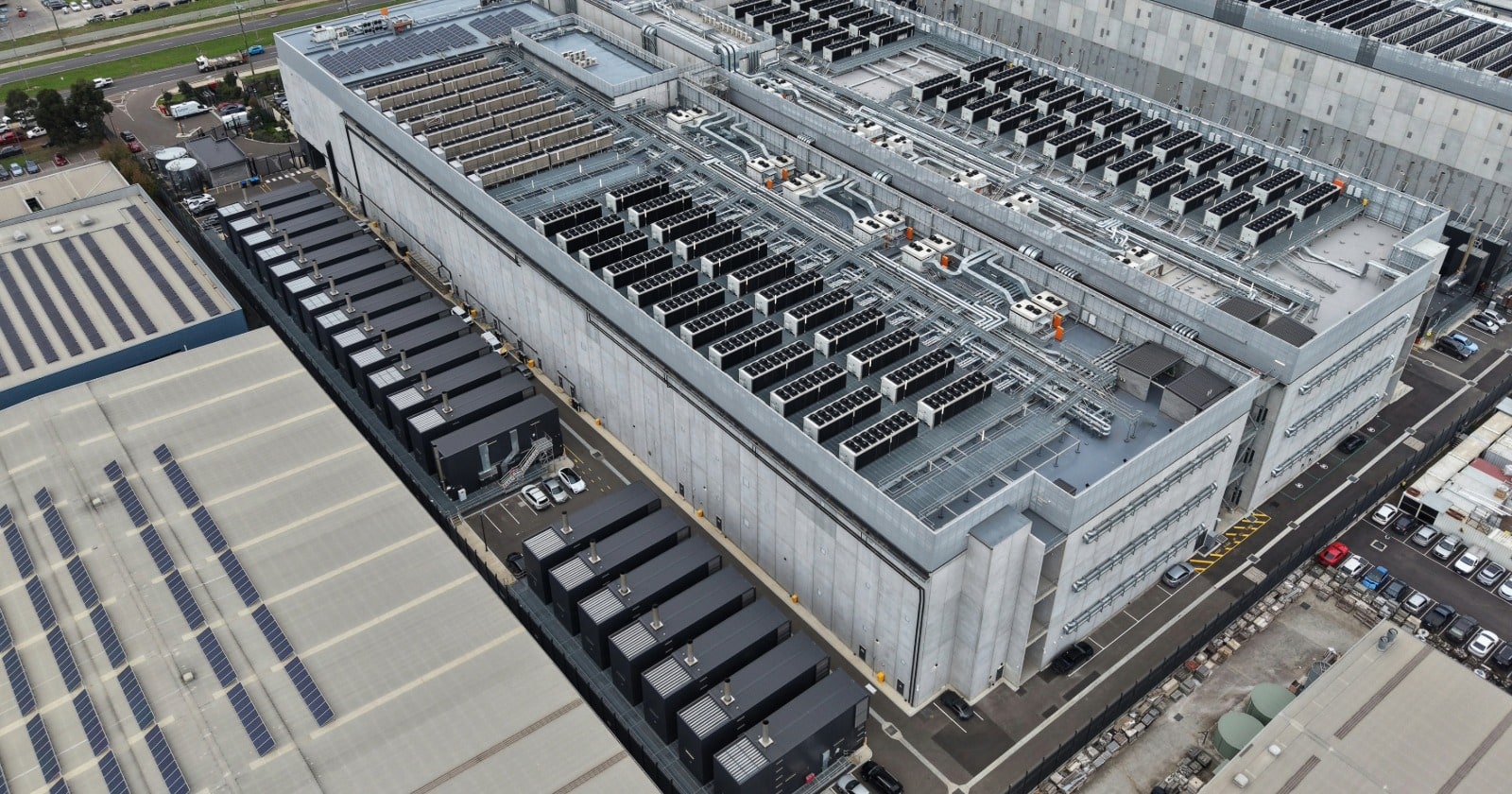
The votes come as data center building is speeding up. Private spending on data center construction reached a seasonally adjusted annual rate of $96.5 billion in September, the Census Bureau reported November 2, up 90 percent from $50.7 billion a year earlier. When the bureau started tracking the category in January 2014, the rate was $1.6 billion.
Spending has risen for 10 straight months and is up by a third since June alone. Data centers now make up about two-thirds of private office construction, the category the bureau files them under. Private factory construction, for comparison, was $167.2 billion. The office-versus-factory race was the main story in August's construction report.
More votes are coming. Clarksville, Arkansas, votes on two data center measures December 1, and a proposed constitutional amendment banning new large data centers could be on Ohio's statewide ballot next year. In an Ohio Northern University poll of Ohio adults last month, 57 percent said they would vote for such an amendment and 20 percent said they would vote against it.
Sources
Unofficial results from county and city election offices, including the boards of elections of Ashtabula, Butler, Champaign, Clinton, Defiance, Delaware, Franklin, Huron, Lake, Licking, Lucas, Miami, Pickaway, Trumbull, and Wyandot counties in Ohio; the Los Angeles County Registrar-Recorder; Volusia County, Florida; the Bloomington Board of Election Commissioners and Madison and Will counties, Illinois; Butler, Franklin, and Lyon counties, Kansas; the city of Boulder City, Nevada; Cumberland County, New Jersey; the North Dakota Secretary of State; and Rock County, Wisconsin. Results for Morgan County, Illinois, and the four Maine towns are from WLDS, the Portland Press Herald, the Sun Journal, and the Wiscasset Newspaper. Measure list from The GridSight. Context from Fortune, Fortune (the El-Sayed quote, first reported by E&E News), and Route Fifty. NBC News Exit Poll, November 3, 2026. Gallup, May 13, 2026. U.S. Census Bureau, value of private construction put in place, November 2, 2026, and city and town population estimates, Vintage 2025.
Add CensusEasy as a preferred source on Google to see our stories first.
 GENERAL
Retailers, Nielsen, and 12 other business groups oppose dropping race from the 2030 census
Fourteen business groups told the Commerce Department that census race and ethnicity data are the benchmark companies use to check their own numbers, from store site selection to TV ratings.
 GENERAL
US trade deficit eased to $105 billion in September, with Vietnam leading all countries for 2026
The U.S. trade deficit narrowed slightly to $105.0 billion in September. Computer imports have doubled this year, drug imports have fallen by 44 percent, and Vietnam has passed Mexico and China for the largest goods deficit.
 GENERAL
Asian population by state
About 24.6 million Americans identify as Asian alone or in combination. California has 7.2 million, Hawaii has the highest share at 57 percent, and Texas's Asian population grew 27.9 percent in five years.
How did data center ballot measures do in the 2026 election?
Data center opponents won 38 of the 39 local measures decided on November 3, 2026, according to unofficial county results. Voters in 35 communities across eight states approved bans, moratoriums, and restrictions or rejected proposals to allow data centers.
Which states voted on data centers in November 2026?
Ohio had 19 data center measures, all of which went against development. Other votes were in California, Florida, Illinois, Kansas, Maine, Nevada, New Jersey, North Dakota, and Wisconsin. Harwood, North Dakota, was the only place where opponents lost.
How much is being spent on data center construction?
Private data center construction ran at a seasonally adjusted annual rate of $96.5 billion in September 2026, up 90 percent from a year earlier, the Census Bureau reported. The rate was $1.6 billion when the bureau began tracking it in 2014.