
The cities where most households don't own a car
See more of our coverage in your search results.
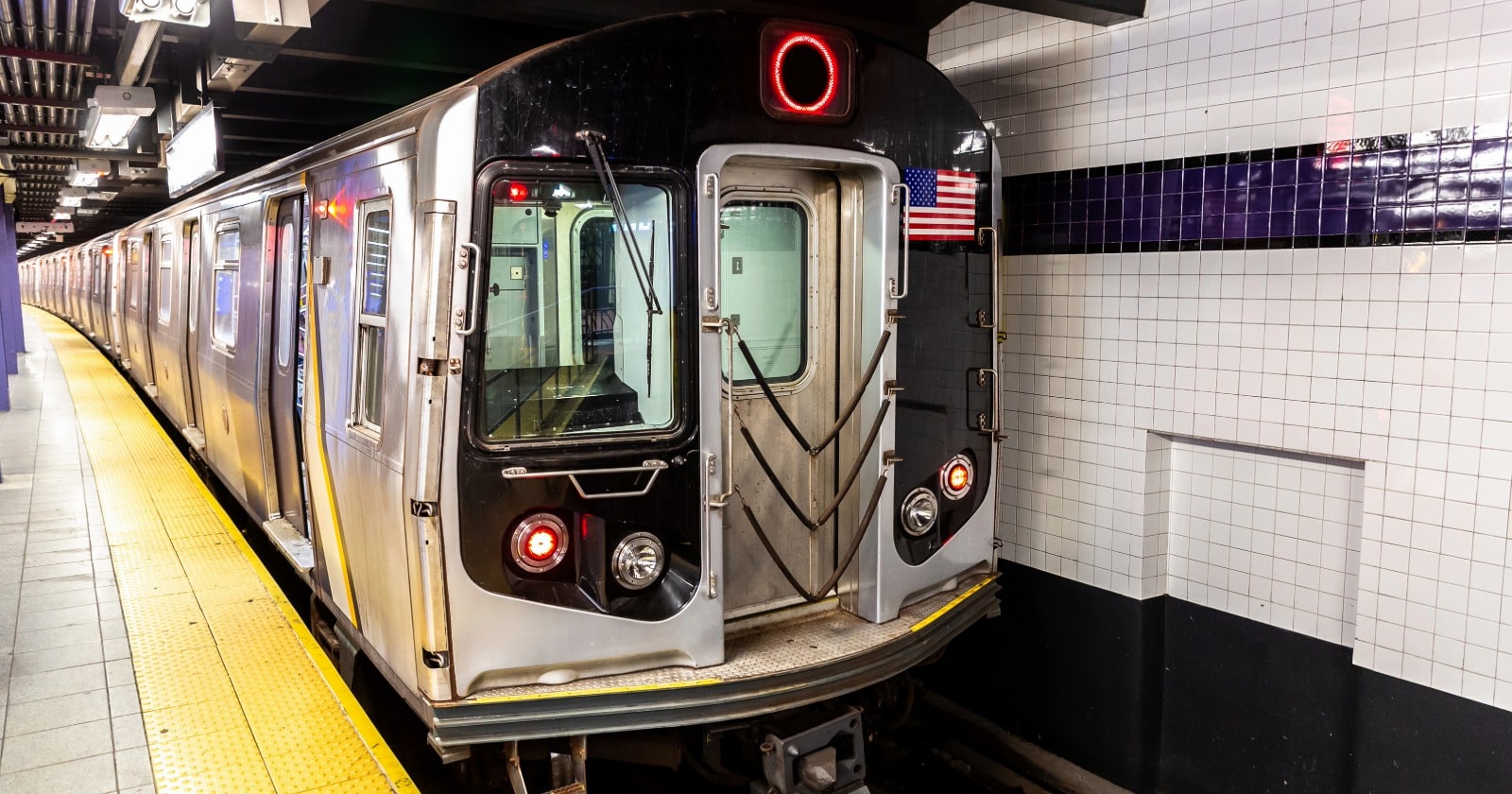
In New York City, 55.3 percent of households don't own a car. It's the largest city in America and that's a majority of an 8.5 million person city getting around without owning a car.
Car ownership is nearly universal in the United States, so it's not surprising that the cities with the best public transit systems will the top list.
| City | Households without a vehicle |
|---|---|
| New York, NY | 55.3% |
| Jersey City, NJ | 40.3% |
| Washington, DC | 36.0% |
| Newark, NJ | 34.3% |
| Boston, MA | 33.3% |
| Cambridge, MA | 33.2% |
| Hartford, CT | 30.6% |
| San Francisco, CA | 30.2% |
| Philadelphia, PA | 27.9% |
| Baltimore, MD | 26.7% |
| Chicago, IL | 26.6% |
Two kinds of car-free
Manhattan and Hartford both show up on this list, but they mean opposite things.
In New York, San Francisco, Cambridge, and Washington, going car-free is frequently a choice. These are places with dense transit, walkable street grids, and parking that costs more per month than a car payment. Households there skip the car because the city works without one, although many could easily afford one.
In Hartford, Newark, Baltimore, and New Haven, the number reflects something else. These are cities with high poverty rates where a large share of households can't afford a vehicle, in metros built around the assumption that everyone drives. The public transit exists but it's thinner, and the jobs have largely moved to suburbs the bus doesn't reach well. Not owning a car there restricts which jobs you have access to.
Why it matters beyond commuting
A car is the most common way Americans reach work, groceries, doctors, and school. Where households don't have one and transit is weak, everything gets harder in ways that compound: fewer reachable jobs, longer trips for food, missed medical appointments.
It also shows up in emergencies. Evacuation planning routinely assumes households can drive themselves out, and the places where that assumption breaks are exactly the ones on the second half of this list.
The upside case is real too. Households without a car spend dramatically less (no car payment, no insurance, no high gas fill ups). Transportation is the second-largest expense for most American families after housing, so in a city where skipping a car is genuinely viable, that's thousands of dollars a year that goes somewhere else.
The commuting side of this is in the best and worst commutes in America, and the transit-ridership rankings are at most transit commuters.
Sources
Vehicle availability figures are from the U.S. Census Bureau American Community Survey 5-year estimates, table B25044, and measure occupied housing units with no vehicle available, for cities with at least 100,000 residents. The measure counts households, not people.
Add CensusEasy as a preferred source on Google to see our stories first.
 GENERAL
Before you move to Austin: what the census data says
Austin doubled in size since 1990 and home values jumped about 55% since 2020. Here's what the Census numbers actually show about the city, the metro, and the suburban ring before you make the move.
 GENERAL
St. Louis has lost 30% of its people since 1990, but the region around it hasn't
The city of St. Louis had 278,144 residents in 2025, down from 396,685 in 1990. The metro area grew over the same period, and nearly all the loss is inside city limits that haven't changed since 1876.
 GENERAL
Black household income rises 76% since 1967, but dollar gap with White households widens
Census figures back to 1967 show Black median household income up 76.2 percent after inflation, to $59,980. The ratio to non-Hispanic White income narrowed, but the gap in dollars grew to $36,730.
Which US city has the most households without a car?
New York City, where 55.3 percent of households own no vehicle, more than any other US city by a wide margin. Jersey City follows at 40.3 percent, then Washington, DC at 36.0 percent, Newark at 34.3 percent, and Boston at 33.3 percent.
Do people in these cities choose not to own a car?
It depends on the city. In New York, San Francisco, Cambridge, and Washington, going without a car is often a deliberate choice in places with dense transit, walkable streets, and expensive parking. In cities like Hartford, Newark, and Baltimore, high rates reflect households that cannot afford a vehicle in metros built around driving.
Why does car ownership matter beyond commuting?
A car is how most Americans reach work, groceries, medical care, and school. Where households lack one and transit is limited, job access narrows and errands take much longer. Evacuation planning also tends to assume households can drive themselves out, which fails in exactly the places with the fewest cars.