Before you move to Austin: what the census data says
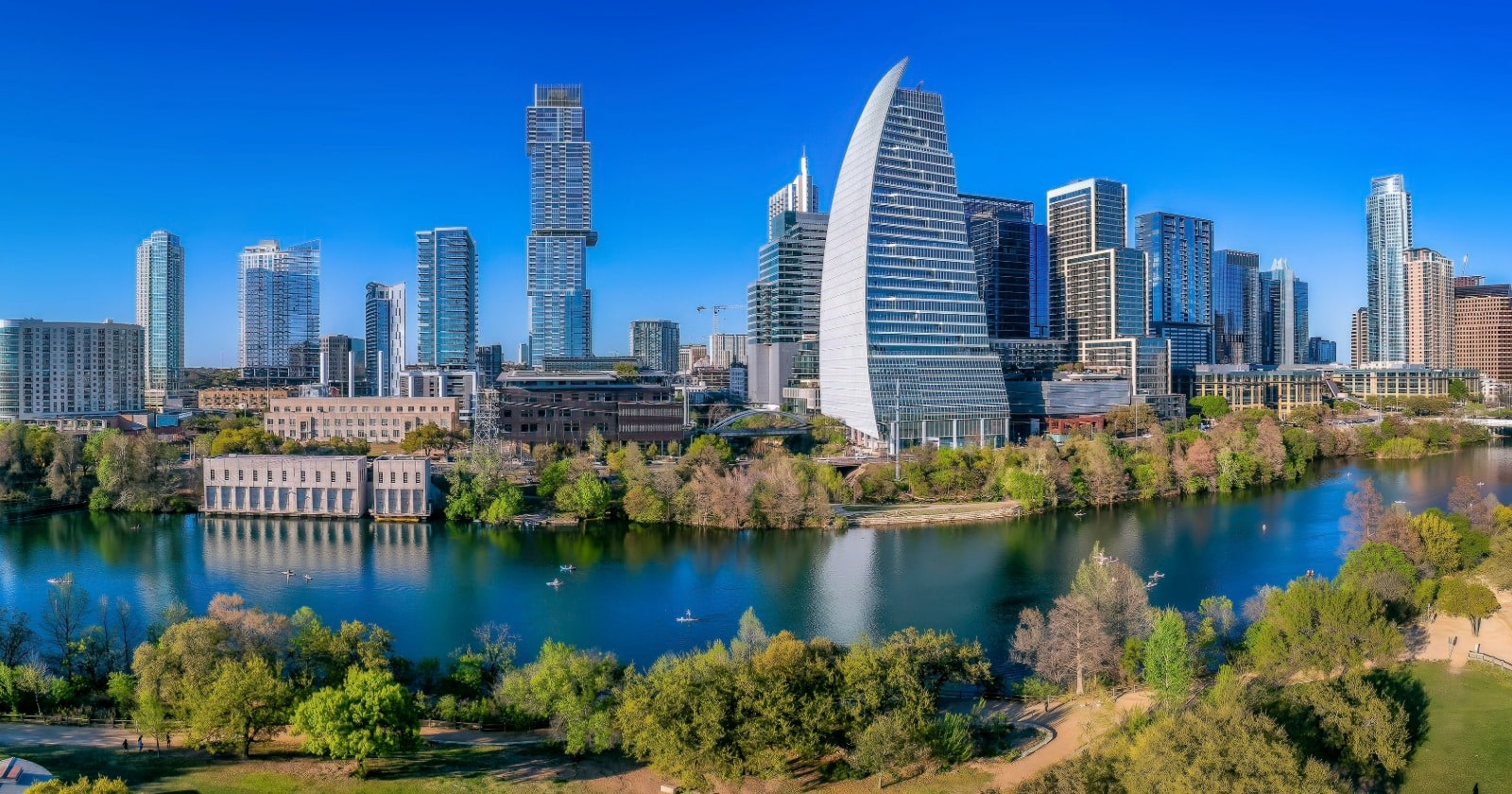
See more of our coverage in your search results.
Austin spent the last 30 years turning from a laid-back college and government town into one of the country's biggest tech hubs. The Census data backs up most of the hype, but it also tells you what people leave out when they pitch you on the move. If you're thinking about moving to Austin, here's what the numbers actually show.
In 1990, Austin had a population of 465,577. The latest count puts it at 979,539. That's more than double in a single generation, and it doesn't even include the suburbs that exploded around it. Texas as a whole grew fast over the same period, and you can see the bigger picture in how Texas's population has changed since 1990.
The median age moved too, from 29 in 1990 to 35 today. That sounds small, but it tracks a real shift. Austin used to be defined by students and young state workers. Now it's full of mid-career professionals who came for jobs, stayed, and started families. The poverty rate dropped from 18% in 1990 to 12% now, which is the kind of number that gets buried under home-price headlines but matters if you're trying to understand who actually lives here.
Median household income in Austin went from $25,414 in 1990 to $42,689 in 2000, then $50,520 in 2010, $75,752 in 2020, and $93,658 in the 2020-2024 American Community Survey. Most of that climb came after 2010.
The metro number is even higher. Across the Austin-Round Rock metro, median household income is $100,512, with a poverty rate of 9.8% and a population of 2,426,592. When you hear "Austin," people usually mean the metro, not the city limits, and the gap between the two is worth keeping straight.
One thing the household income numbers don't capture: Texas has no state income tax. A $93,658 salary in Austin keeps more of its take-home than the same salary in California or New York. That's a real part of the relocation math. The tradeoff is that Texas leans on property taxes instead, which matters a lot once you see what homes cost now.
What home prices look like now vs. five years ago
Here's where the candid part comes in. Median home value in Austin was $72,100 in 1990, $120,800 in 2000, $200,000 in 2010, and $358,600 in 2020. Today it's $555,300. That's a jump of about 55% in roughly five years.
Wages went up over that same stretch, but not 55%. Income rose from $75,752 to $93,658 since 2020, which is solid, but it didn't keep pace with housing. So if you're picturing the affordable Austin people talked about a decade ago, that version is gone. The city is still cheaper than the coastal metros plenty of newcomers are leaving, and that's the comparison that keeps it growing. Just don't expect a bargain.
The suburban ring
Most of the recent growth isn't in the city. It's in the ring of suburbs spreading north into Williamson County and south into Hays County. These are where a lot of newcomers actually end up, because that's where the newer housing and the bigger lots are.
To the north in Williamson County, Leander has a median household income of $139,048, a median home value of $506,200, and 74,067 residents. Cedar Park sits at $129,545 income, $513,600 home value, and 78,301 people. Round Rock, the one that gives the metro its name, has a median income of $99,287, homes at $418,600, and 127,786 residents. Georgetown comes in at $95,062 income, $429,100 homes, and 85,999 people. Pflugerville rounds it out at $117,799 income, $402,400 homes, and 65,971 residents.
To the south in Hays County, Buda has a median income of $123,766, homes at $446,600, and 15,859 people. Kyle sits at $90,323 income, $334,600 homes, and 56,823 residents.
The pattern is clear. Several of these suburbs post higher household incomes than Austin proper, and their home values are mostly lower. That's the suburban deal: more space and (in some cases) more buying power, in exchange for a commute.
One suburb breaks the pattern, and it's worth explaining so you don't misread it. San Marcos shows a median household income of $51,281, with homes at $310,400 and a population of 70,897. On paper that looks like a poor outlier next to Buda and Kyle.
It isn't. San Marcos is home to Texas State University, and a large share of its "households" are students. Student incomes drag the median way down without telling you anything about the working families who live there. If you're scouting San Marcos, look past that one number and check the housing and the neighborhoods directly. The low median is a statistical artifact of the student population, not a sign of a struggling town.
Austin looks different than it did in 1990, and the race numbers show it. In 1990, the city was 71% White, 23% Hispanic, and 12% Black. Today it's 47% White, 32% Hispanic, 7% Black, and 9% Asian. The Hispanic and Asian shares grew, and the Black share fell by almost half.
If you want to compare any of these places side by side, that's what our compare tool is built for. Pull up Austin against the metro, or stack Leander next to Kyle, or check whatever suburb you're eyeing before you commit to a school district or a commute. And if you're weighing Austin against another Sun Belt boomtown, the same approach works for Nashville. The numbers won't decide for you, but they'll keep you honest. You can also browse the rest of Texas while you're at it.
Sources
All figures come from the U.S. Census Bureau, drawn from the American Community Survey and the decennial census.
Add CensusEasy as a preferred source on Google to see our stories first.
 GENERAL
St. Louis has lost 30% of its people since 1990, but the region around it hasn't
The city of St. Louis had 278,144 residents in 2025, down from 396,685 in 1990. The metro area grew over the same period, and nearly all the loss is inside city limits that haven't changed since 1876.
 GENERAL
Black household income rises 76% since 1967, but dollar gap with White households widens
Census figures back to 1967 show Black median household income up 76.2 percent after inflation, to $59,980. The ratio to non-Hispanic White income narrowed, but the gap in dollars grew to $36,730.
 GENERAL
These U.S. counties have the highest housing vacancy rates, but they're not abandoned
Sixty-one percent of housing in Summit County, Colorado is vacant. That's Breckenridge, not a ghost town. Every county at the top of the vacancy list is a vacation destination.
How much have Austin home prices risen since 2020?
Austin's median home value went from $358,600 in 2020 to $555,300 today, an increase of about 55%. Household income rose over the same period from $75,752 to $93,658, so wages did not keep pace with housing costs.
What's the difference between Austin the city and the Austin metro?
Austin city has 979,539 residents, a median household income of $93,658, and a 12% poverty rate. The wider Austin-Round Rock metro has 2,426,592 residents, a median household income of $100,512, and a 9.8% poverty rate. When people say Austin, they usually mean the metro.
Why does San Marcos have such a low median income?
San Marcos shows a median household income of $51,281, well below nearby suburbs like Buda ($123,766) and Kyle ($90,323). The reason is Texas State University. A large share of its households are students, which pulls the median down. It is a statistical effect, not a sign of a poor suburb.