
Where America's veterans live, and which wars they came home from
See more of our coverage in your search results.
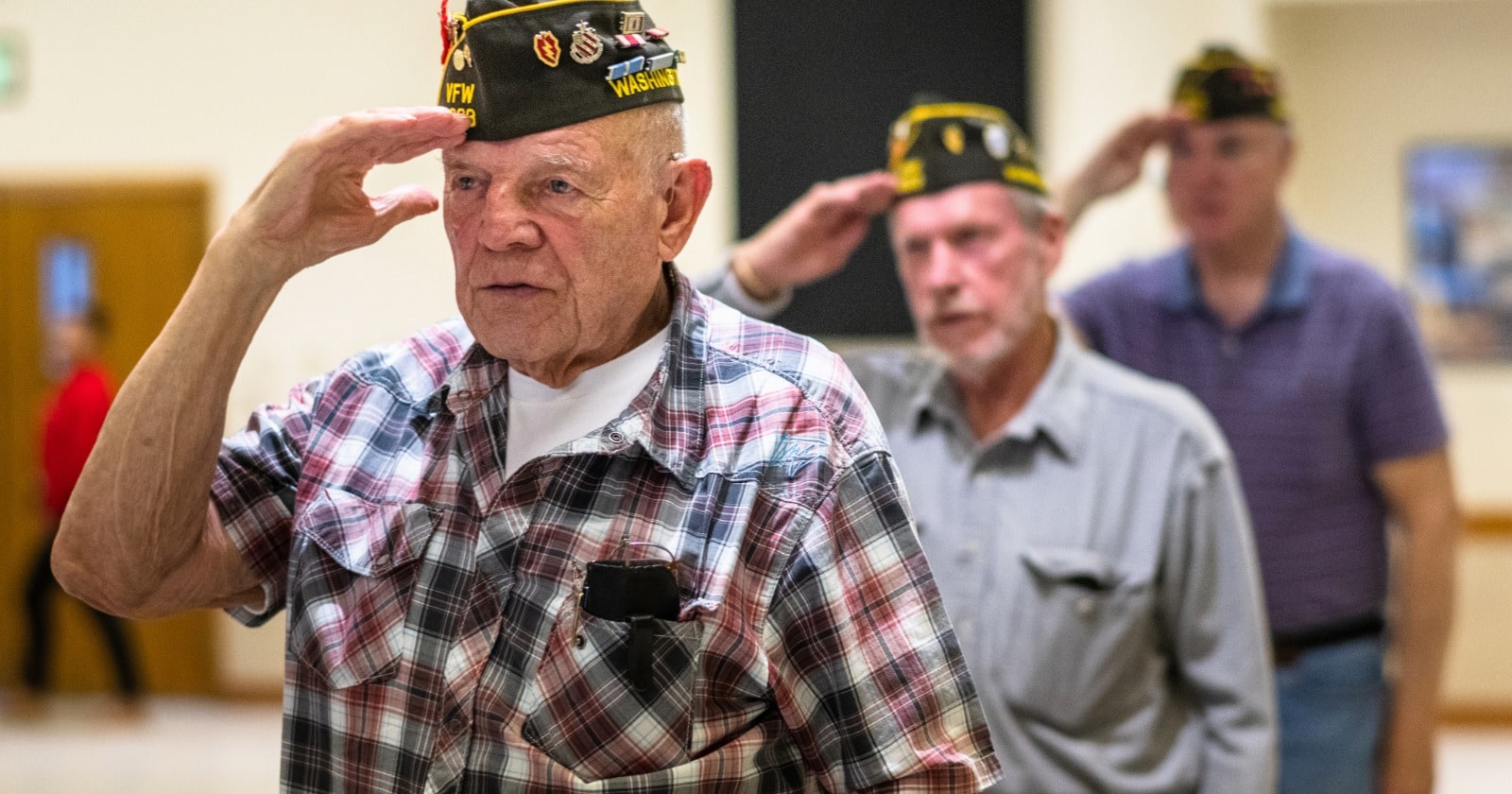
About 16.2 million Americans are military veterans, and they aren't spread evenly across the country. In Onslow County, North Carolina, home to Camp Lejeune, more than one in five residents has served. In parts of the Northeast, the share is closer to one in twenty-five.
The base map
By state, Alaska has the highest share of veterans at 10.7 percent, followed by Virginia at 9.4 percent, then Montana and Wyoming, both at 9.0 percent. Alaska and Montana reflect something different from Virginia. Virginia is the Pentagon and Norfolk. Alaska and Montana are places veterans move to, or stay in, for space and hunting and cheap land.
Drop to the county level and the pattern shows that nearly every leader is a military base town.
| County | Veteran share | Installation |
|---|---|---|
| Onslow County, NC | 21.4% | Camp Lejeune |
| Okaloosa County, FL | 20.4% | Eglin Air Force Base |
| Montgomery County, TN | 19.0% | Fort Campbell |
| Bell County, TX | 18.5% | Fort Cavazos |
| Cumberland County, NC | 18.3% | Fort Bragg |
| Cochise County, AZ | 17.4% | Fort Huachuca |
People finish a tour, they've already got a house and a spouse with a job and kids in school, and they stay. Base towns accumulate veterans decade after decade, which is why the VA clinics, the surplus stores, and the politics in these counties all look the way they do.
The wars are changing
The other map is generational, and it's moving quickly. Here's every living veteran, sorted by the era they served in.
| Era | Living veterans |
|---|---|
| Vietnam | 5,359,681 |
| Post-9/11 (Gulf War era, 2001 on) | 4,266,376 |
| Gulf War era (1990s) | 3,931,621 |
| Korea | 727,890 |
| World War II | 156,874 |
Vietnam is still the largest by a wide margin, but those veterans are now mostly in their late seventies and eighties. World War II is nearly gone: about 157,000 remain out of the roughly 16 million Americans who served. In the next decade that line reaches zero, and the country loses its last living link to that war.
Meanwhile the post-9/11 group has grown into the second-largest era, and it's the only one that keeps growing. That shift reshapes what veterans need. A Vietnam veteran and a post-9/11 veteran are separated by about fifty years, which means one is dealing with the medical needs of old age and the other with career transitions, young families, and mortgages.
It also means the veteran population is going to shrink. Vietnam's 5.4 million is the last cohort produced by conscription. The all-volunteer force is smaller, so each subsequent generation of veterans is smaller too, and the total falls as the draft-era generations age out.
Full rankings are at veterans by state and veterans by county, and both download as CSV.
Sources
Veteran counts, shares, and period of service are from the U.S. Census Bureau American Community Survey 5-year estimates, tables B21001 and B21002. Period-of-service categories are as the Census Bureau defines them, and a veteran who served in more than one era is counted in each, so the era figures are not mutually exclusive.
Add CensusEasy as a preferred source on Google to see our stories first.
 GENERAL
Black household income rises 76% since 1967, but dollar gap with White households widens
Census figures back to 1967 show Black median household income up 76.2 percent after inflation, to $59,980. The ratio to non-Hispanic White income narrowed, but the gap in dollars grew to $36,730.
 GENERAL
These U.S. counties have the highest housing vacancy rates, but they're not abandoned
Sixty-one percent of housing in Summit County, Colorado is vacant. That's Breckenridge, not a ghost town. Every county at the top of the vacancy list is a vacation destination.
 GENERAL
The area codes with the most people
Hawaii's 808 is the most populous area code covering a whole state, with 1.43 million residents. Arizona averages 1.5 million people per code. Here is every state's area codes and residents per code.
Which state has the most veterans per capita?
Alaska has the highest share of veterans of any state at 10.7 percent, followed by Virginia at 9.4 percent, then Montana and Wyoming at 9.0 percent each. Virginia's share reflects its concentration of military installations, while Alaska and Montana also attract and retain veterans after service.
Which county has the highest share of veterans?
Onslow County, North Carolina, home to Camp Lejeune, has the highest share of any county at 21.4 percent, meaning more than one in five residents has served. Okaloosa County, Florida follows at 20.4 percent, then Montgomery County, Tennessee at 19.0 percent. Nearly every leading county is a military base town.
How many World War II veterans are still alive?
About 156,874 World War II veterans were still living, according to Census Bureau estimates, out of roughly 16 million Americans who served in that war. By comparison, about 5.4 million Vietnam-era veterans and 727,890 Korea-era veterans remain, making Vietnam the largest living cohort.