
US construction spending is falling as the factory-building boom fades

See more of our coverage in your search results.
Construction spending ran at a $2,166.5 billion annual rate in June, and the U.S. Census Bureau called it 0.1 percent below May, a change smaller than the report's own margin of error. Spending is down 3.2 percent from June 2025, and the first half of 2026 came in 3.5 percent below the first half of last year.
The category tables in the August 3 release show where that annual decline is happening, and it's overwhelmingly one place: Factory construction.
Manufacturing construction ran at a $172.7 billion annual rate in June, down from $219.6 billion a year earlier. That's a 21.4 percent drop, and it accounts for about two thirds of the entire national decline by itself. Total spending fell $71.2 billion year over year, and manufacturing alone gave up $46.9 billion of it. The factory-building boom that followed the CHIPS Act and the industrial-policy push of the early 2020s pushed that category to record levels, and it's now deflating faster than anything else in the report.
Residential explains most of the rest. Home construction ran 4.7 percent below last June, with new single-family down 3.3 percent and multifamily down about the same. That lines up with what the permits data has been saying, that builders are finishing more homes than they're starting, which we covered in the June durable goods report's sister release and in the flat homeownership numbers.
Offices are the surprise
One category is growing through all of this. Office construction ran at a $132.8 billion rate in June, up 12.5 percent from a year earlier, and it has risen every single month shown in the release. That looks strange against years of remote-work headlines and empty towers until you know how the Bureau classifies things: the office category in this survey includes data centers. The AI buildout is being recorded, in this dataset, as office construction. Power construction is up 3.5 percent year over year too, which fits the same story, since data centers need generation to match.
Public construction is flat. Governments spent at a $544.1 billion rate, virtually unchanged from May and up just 1.7 percent on the year, with schools flat and highways roughly level.
So to basically sum up June: nothing changed in a month, and the yearly decline is really two things, a factory boom unwinding and home construction cooling off, partly offset by data centers being classified as offices.
Sources
All figures are seasonally adjusted annual rates from the U.S. Census Bureau's Monthly Construction Spending report for June 2026, release CB26-126, published August 3, 2026. Category detail and year-over-year comparisons are computed from Table 1 of the release. The office category includes data centers under the survey's classification. Figures are in current dollars, so they aren't adjusted for inflation.
Add CensusEasy as a preferred source on Google to see our stories first.
 GENERAL
Black household income rises 76% since 1967, but dollar gap with White households widens
Census figures back to 1967 show Black median household income up 76.2 percent after inflation, to $59,980. The ratio to non-Hispanic White income narrowed, but the gap in dollars grew to $36,730.
 GENERAL
These U.S. counties have the highest housing vacancy rates, but they're not abandoned
Sixty-one percent of housing in Summit County, Colorado is vacant. That's Breckenridge, not a ghost town. Every county at the top of the vacancy list is a vacation destination.
 GENERAL
The area codes with the most people
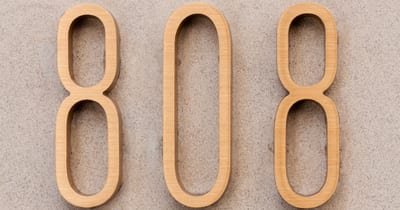
Hawaii's 808 is the most populous area code covering a whole state, with 1.43 million residents. Arizona averages 1.5 million people per code. Here is every state's area codes and residents per code.
How much did construction spending change in June 2026?
Construction spending ran at a seasonally adjusted annual rate of $2,166.5 billion in June, 0.1 percent below May, a change smaller than the report's margin of error. The yearly picture moved more: spending was 3.2 percent below June 2025, and the first half of 2026 came in 3.5 percent below the same period last year.
Why is construction spending falling?
Mostly because factory construction is unwinding. Manufacturing construction ran 21.4 percent below last June, a $46.9 billion drop that accounts for about two thirds of the total $71.2 billion decline. Residential construction, down 4.7 percent, explains most of the rest. Public construction is roughly flat.
Why is office construction rising if offices are empty?
Because the Census Bureau's office category includes data centers. Office construction rose 12.5 percent year over year and has climbed every month in the release, which reflects the data center buildout rather than traditional office towers. Power construction is up 3.5 percent as well, consistent with the same trend.