
The Most Rent-Burdened Cities in America
See more of our coverage in your search results.
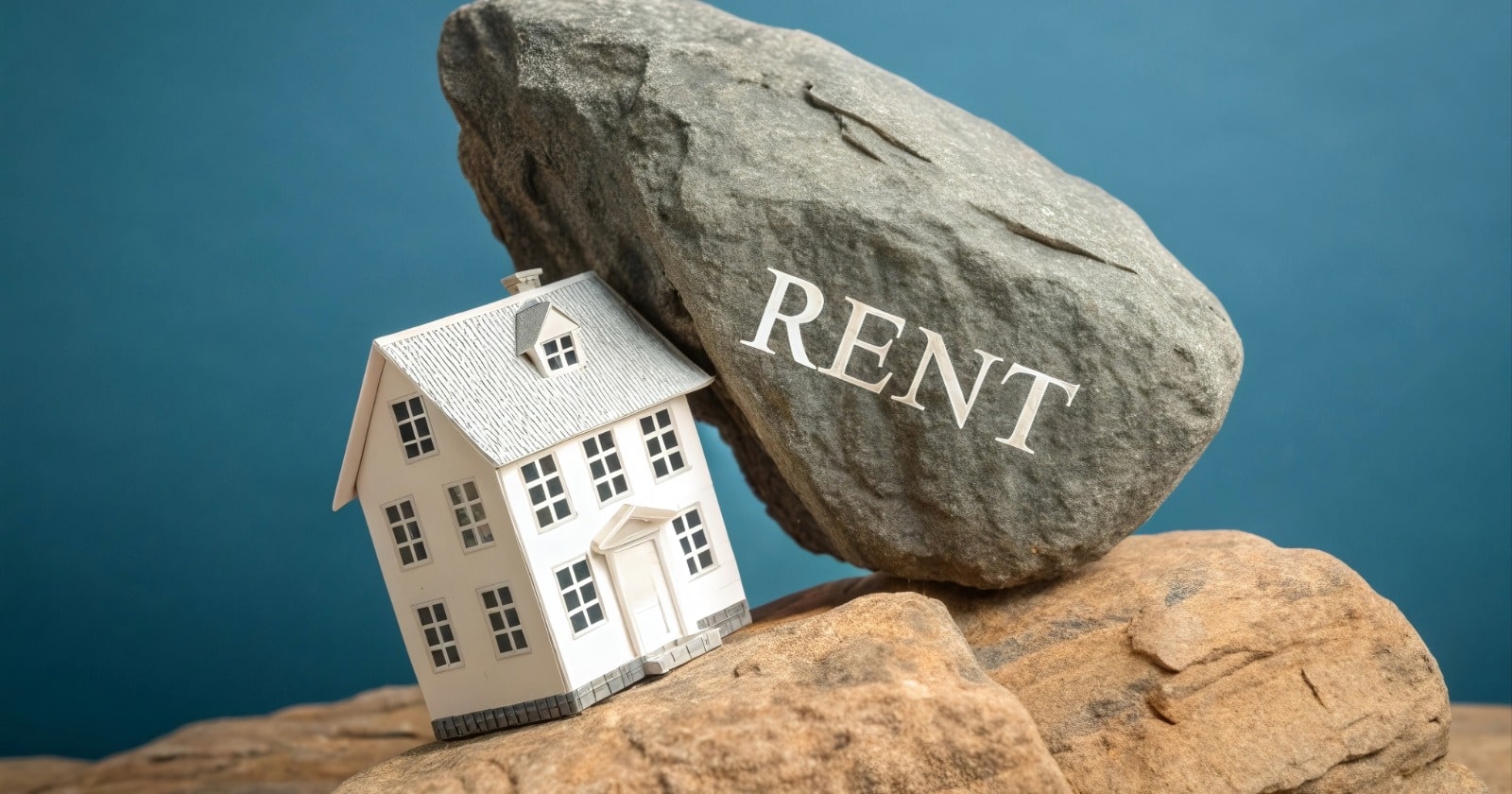
Housing economists call a household rent-burdened when it spends more than 30 percent of its income on rent, the threshold past which the budget for everything else starts to buckle. In some American cities that describes a majority of renters. According to the U.S. Census Bureau American Community Survey, in the most stretched cities more than two-thirds of renters are cost-burdened, and the map has an unmistakable center of gravity: Florida. Below are the leaders among cities of at least 50,000 residents.
The most rent-burdened cities
| Rank | City | Renters cost-burdened |
|---|---|---|
| 1 | Lauderhill, FL | 71.2% |
| 2 | Lakewood, NJ | 71.2% |
| 3 | Palm Harbor, FL | 69.0% |
| 4 | Tamarac, FL | 68.0% |
| 5 | Davie, FL | 67.1% |
| 6 | Kissimmee, FL | 67.0% |
| 7 | El Cajon, CA | 66.4% |
| 8 | DeSoto, TX | 66.3% |
| 9 | The Hammocks, FL | 65.9% |
| 10 | North Miami, FL | 65.9% |
| 11 | Apopka, FL | 65.7% |
| 12 | Menifee, CA | 65.2% |
Florida is the epicenter
Eight of the top twelve are in Florida. The state saw some of the sharpest rent increases in the country after 2020 as new residents poured in, while local wages, which have long trailed the national average, did not keep pace. The result is a squeeze felt hardest in working-class suburbs. Lauderhill, Tamarac, Davie, North Miami, and The Hammocks ring greater Miami; Kissimmee and Apopka sit outside Orlando; Palm Harbor anchors the Tampa suburbs. In each, roughly two of every three renting households now pay more than 30 percent of their income toward rent.
The exceptions prove the pattern
The non-Florida cities on the list fit the same profile: places where rents have climbed but incomes are modest. Lakewood, New Jersey, tied for the top spot, has a fast-growing population with large families and lower median incomes. El Cajon near San Diego and Menifee in Riverside County are inland California cities where housing costs have chased the coast while paychecks have not. DeSoto, south of Dallas, rounds out the group. The common thread is a gap between the cost of a lease and the size of a paycheck.
Rent burden is the flip side of the affordability story we track from the ownership angle in the most affordable cities to buy a home. See the complete ranking of every city at most rent-burdened cities, or compare any two places with the compare tool.
Sources
Figures are the share of renter households paying 30 percent or more of household income on gross rent, from the U.S. Census Bureau American Community Survey, most recent release. The ranking is limited to cities with at least 50,000 residents. Full ranking: most rent-burdened cities.
Add CensusEasy as a preferred source on Google to see our stories first.
 GENERAL
Black household income rises 76% since 1967, but dollar gap with White households widens
Census figures back to 1967 show Black median household income up 76.2 percent after inflation, to $59,980. The ratio to non-Hispanic White income narrowed, but the gap in dollars grew to $36,730.
 GENERAL
These U.S. counties have the highest housing vacancy rates, but they're not abandoned
Sixty-one percent of housing in Summit County, Colorado is vacant. That's Breckenridge, not a ghost town. Every county at the top of the vacancy list is a vacation destination.
 GENERAL
The area codes with the most people
Hawaii's 808 is the most populous area code covering a whole state, with 1.43 million residents. Arizona averages 1.5 million people per code. Here is every state's area codes and residents per code.
What does it mean to be rent-burdened?
A household is considered rent-burdened when it spends more than 30 percent of its income on rent, the point past which little is left for other necessities. In the most stretched U.S. cities, more than two-thirds of renter households cross that line.
Which city has the most rent-burdened renters?
Among cities of at least 50,000 residents, Lauderhill, Florida and Lakewood, New Jersey are tied at the top, each with 71.2 percent of renters spending more than 30 percent of income on rent.
Why are so many of the most rent-burdened cities in Florida?
Florida saw some of the sharpest rent increases in the country after 2020 as new residents arrived, while local wages have long trailed the national average and did not keep pace. That gap between fast-rising rents and modest incomes hits working-class suburbs around Miami, Orlando, and Tampa hardest.