
Stories

Census privacy changes will reduce detail for small places and population groups
The Bureau published its own roadmap for replacing noise infusion: a 2030 census preview in mid-2027, the ACS fully converted by 2029, and a plain acknowledgment that small areas will lose detail.

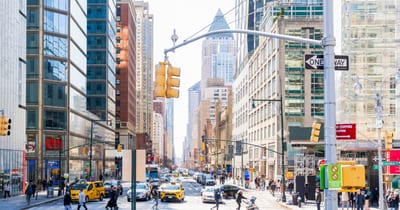
The US cities with the largest white population
New York has about 2.6 million White residents, the most of any city, but they're only 31 percent of it. The cities with the most White people are the biggest cities, where White residents are often a minority.


What is the Census used for?
The census has one constitutional job: dividing the 435 House seats among the states. Redistricting, hundreds of billions in federal funding, and countless business and research decisions all grew on top of that.
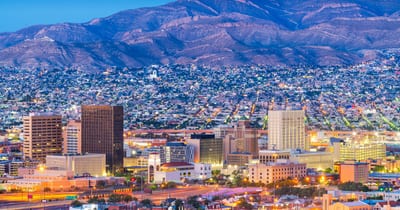
Why El Paso is already preparing for the 2030 census
A city official's warning that 2029 is too late to start lands harder once you see the data. El Paso County stacks the two groups the 2020 census missed most: young children and Hispanic residents.

US fertility hit a record low, but some counties are still booming
The national fertility rate fell to 53.1 in 2025, the lowest ever recorded. But the county map is wildly uneven. We ran the numbers: Orthodox Jewish and border counties top the list, college towns bottom it.

The US cities with the highest white share
The Villages, Florida is the whitest US city over 50,000 people, at 94.9 percent. The rest of the list runs through the Upper Midwest and college towns, with one Arab American city that isn't what it looks like.
US retail sales fell 0.6% in July, dragged down by autos and online
Retail and food services sales slipped to $763.6 billion in July, the first real decline in months. But autos and online sellers drove almost all of it, and the core measure was nearly flat.

Which US counties produce the most pro athletes?
We matched every US-born player in the NFL, NBA, MLB, and NHL to their birth county. St. Louis leads per capita, Georgia's Fulton and Gwinnett counties are among the most athletic in the country, and each sport draws from a different map.
America's foreign-born share is back to its 1890 record
In 2024, 50.2 million US residents were born abroad, the most ever, and at 14.8 percent of the population it ties the all-time high set in 1890. Where the foreign-born actually live tells the rest of the story.

The US cities with the largest Mexican population
Los Angeles has more than 1.1 million people of Mexican origin, the most of any American city. The 12 cities with the largest Mexican populations run through the Southwest, with Chicago the big exception.

AI is everywhere at work now, but the time savings are smaller than the hype
A new Census Bureau survey finds 55% of US workers have used AI on the job, but for about 7 in 10 users it saved two hours a week or less. The wider story is a sharp divide by education.

The most common Asian American surnames
Nguyen leads with more than 500,000 Asian holders, a name that was rare in America before 1975. The 12 most common Asian American surnames, and why almost none of them were common here before 1965.

The Most Ethnically Diverse ZIP Codes in America
ZIP code 94531 east of San Francisco is 24.7% Black, 23.6% Hispanic, 23.1% White and 20.7% Asian, about as evenly divided as American geography gets. Six of the twelve most diverse ZIP codes are in California, none in a big city center.

US Business applications jumped 8.1% in July
Americans filed 578,926 business applications in July 2026, up 8.1 percent. But retail trade accounts for nearly the entire gain, and the applications most likely to become employers actually fell.

The most common first names in America
Michael passed James to become the most common man's name in the country, and Maria climbed from seventh to second among women. Every name on both lists peaked decades ago, which is exactly what you'd expect once you know what the data is counting.
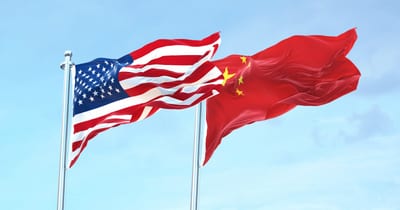
The 12 most Chinese cities in America are all in the SGV
San Marino, California, the old-money town of the Huntington Library, is now 48.3 percent Chinese, the highest share in America. The twelve most Chinese cities all sit in the San Gabriel Valley east of Los Angeles.

The Most Rent-Burdened Cities in America
In the most stretched U.S. cities, more than two-thirds of renters spend over 30 percent of their income on rent. Eight of the top twelve are in Florida, where rents surged after 2020 but wages did not.
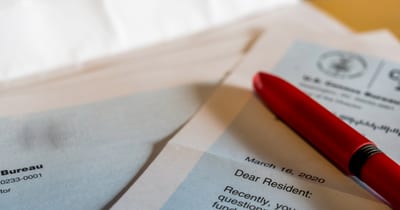
A draft rule would stop counting undocumented immigrants and drop race from the Census
Documents viewed by WIRED show a draft rule that would exclude undocumented immigrants from 2030 apportionment and eliminate race and sexual orientation questions. It matches the June proposed rule advocacy groups warned about, point for point.

Where Do the Most Ethiopian Americans Live?
About 386,500 Americans claim Ethiopian ancestry, and the Washington, D.C. metro alone holds more than a fifth of them. Maryland and Virginia lead the states.

Census officials confirm entire datasets will disappear under the new privacy rule
At a statistical conference in Boston, Census Bureau officials confirmed the noise infusion ban will pull historically published datasets, with small populations hit hardest. Officials denied political motives while the OECD's chief statistician questioned the process.
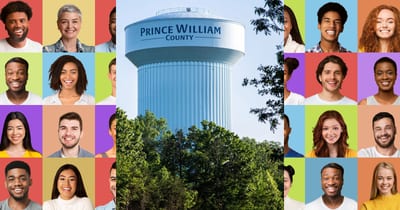
Prince William County ranks among the 10 most diverse counties in America
Prince William County, Virginia ranks 9th of 3,144 counties on the CensusEasy Diversity Score, with white, Hispanic, Black, and Asian residents split more evenly than almost anywhere. In 1990 it was 80.9 percent white.