
When Will Dallas-Fort Worth Surpass Chicago in Population?
See more of our coverage in your search results.
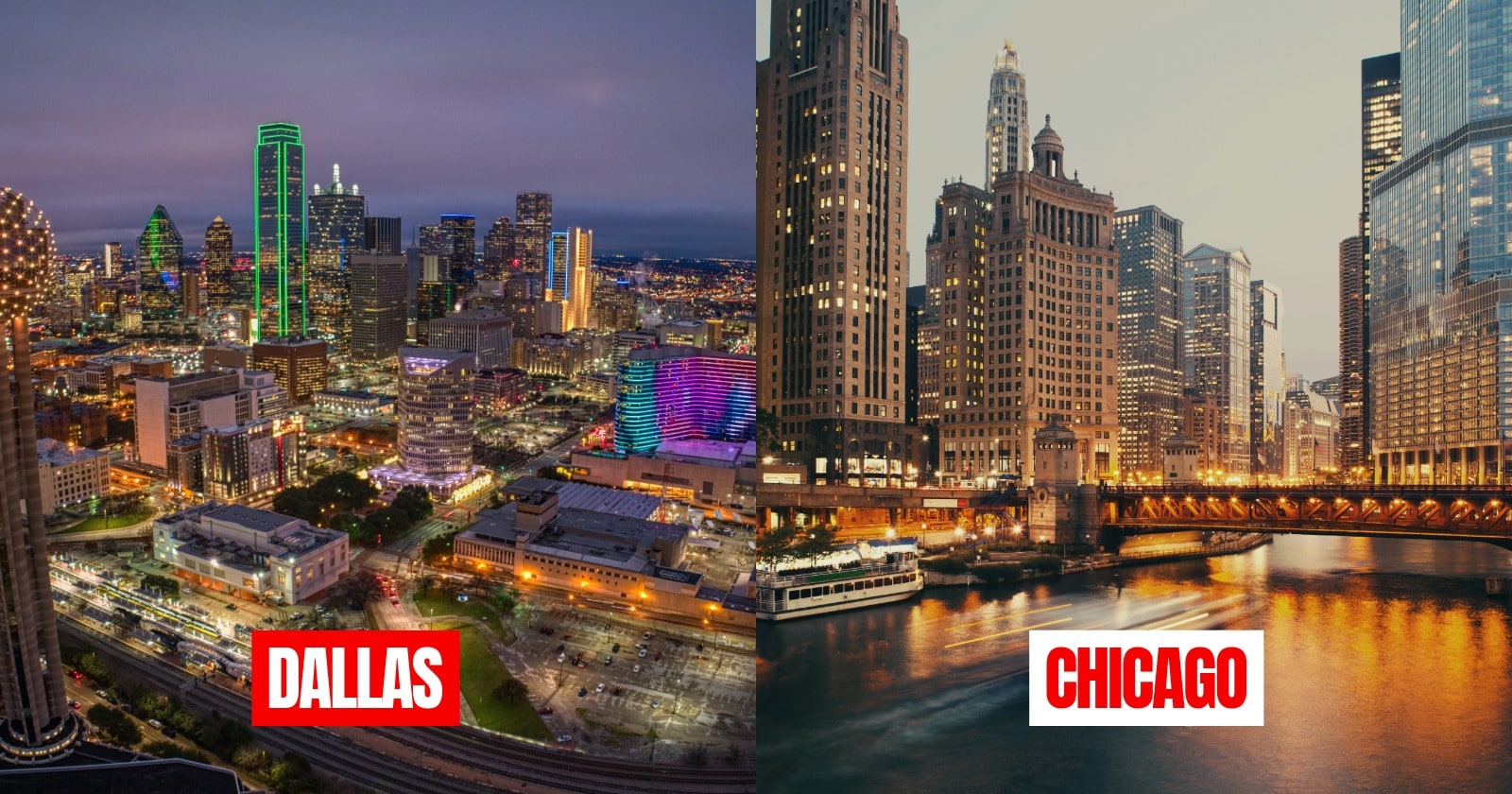
The Dallas-Fort Worth metro is on track to pass Chicago as the third-largest metropolitan area in the United States, and most projections put the crossover in the early 2030s. DFW trails Chicago by less than a million people today, and it is closing that gap by well over 100,000 residents a year while Chicago barely grows at all. The question is no longer whether it happens, but exactly when.
Where the two metros stand right now
As of the 2025 Census estimates, the Dallas-Fort Worth metro has 8,477,157 residents and the Chicago metro has 9,434,123, a gap of about 957,000 people. According to the Fort Worth Economic Development Partnership's analysis of 2025 Census estimates, DFW has grown by approximately 11% since 2020, outpacing every other top-five metro, and added about 123,557 residents over the past year, or roughly 339 people per day.
Chicago, by contrast, has been nearly flat. The metro has hovered around 9.4 million for years, occasionally losing population in individual years as domestic out-migration from the Chicago area offsets immigration and natural increase. When one metro adds 339 people a day and the other treads water, a 957,000-person gap does not last long.
When the crossover happens
The projections cluster tightly around the early-to-mid 2030s. According to the City of Dallas Office of Economic Development, DFW is targeting 2030 to surpass Chicago and become the third-largest metropolitan area in the US. According to Mynd Management's analysis of Census data, the metro is projected to reach 10 million by the 2030s, at which point it is expected to displace Chicago as the nation's third-largest metro behind New York and Los Angeles.
According to Rice University's Kinder Institute for Urban Research, demographers project that DFW will reach 10 million people sometime in the 2030s, surpassing Chicago to become America's third-largest metro area. The consensus across the city, academic, and private-sector sources is the same: sometime in the first half of the 2030s, with 2030 to 2034 as the most commonly cited window.
Why DFW is growing so fast
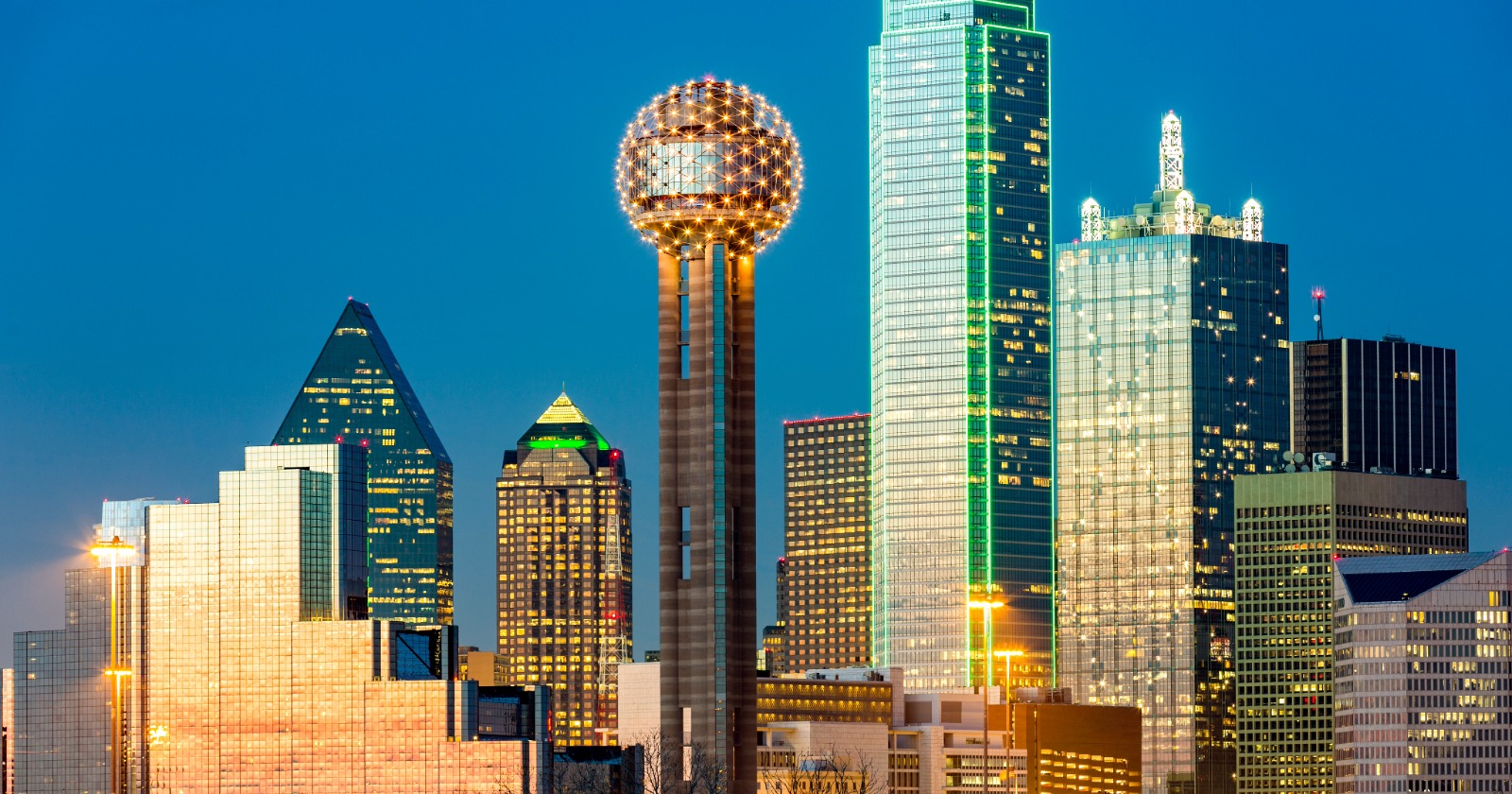
The growth has multiple engines working at once. According to the Kinder Institute, from 2010 to 2020 DFW saw net inbound migration from elsewhere in the United States of more than 500,000, more than any other US metro, and the region received over 100,000 migrants from the Los Angeles, New York, and Chicago metros between 2012 and 2016 alone. People are not just moving to DFW from rural areas. They are moving from the other large metros, including Chicago itself.
The corporate base has been a major driver. According to the Kinder Institute, the DFW metroplex is now home to 24 Fortune 500 company headquarters, trailing only New York and Chicago, up from fewer than five just 40 years ago. Toyota Motor North America, Charles Schwab, CBRE, and Tenet Healthcare all relocated headquarters to the region, joining established anchors like Texas Instruments, American Airlines, and Southwest Airlines. Each corporate relocation brings jobs, and jobs bring people.
The growth is also young and self-sustaining. According to the Kinder Institute, inflows of young families have given DFW a more youthful population than most, with a median age of 35.1 in 2018 compared with a national metro average of 38.5. A younger population means more births and fewer deaths, so DFW grows through natural increase as well as migration, a combination that compounds over time.
Why Chicago is standing still
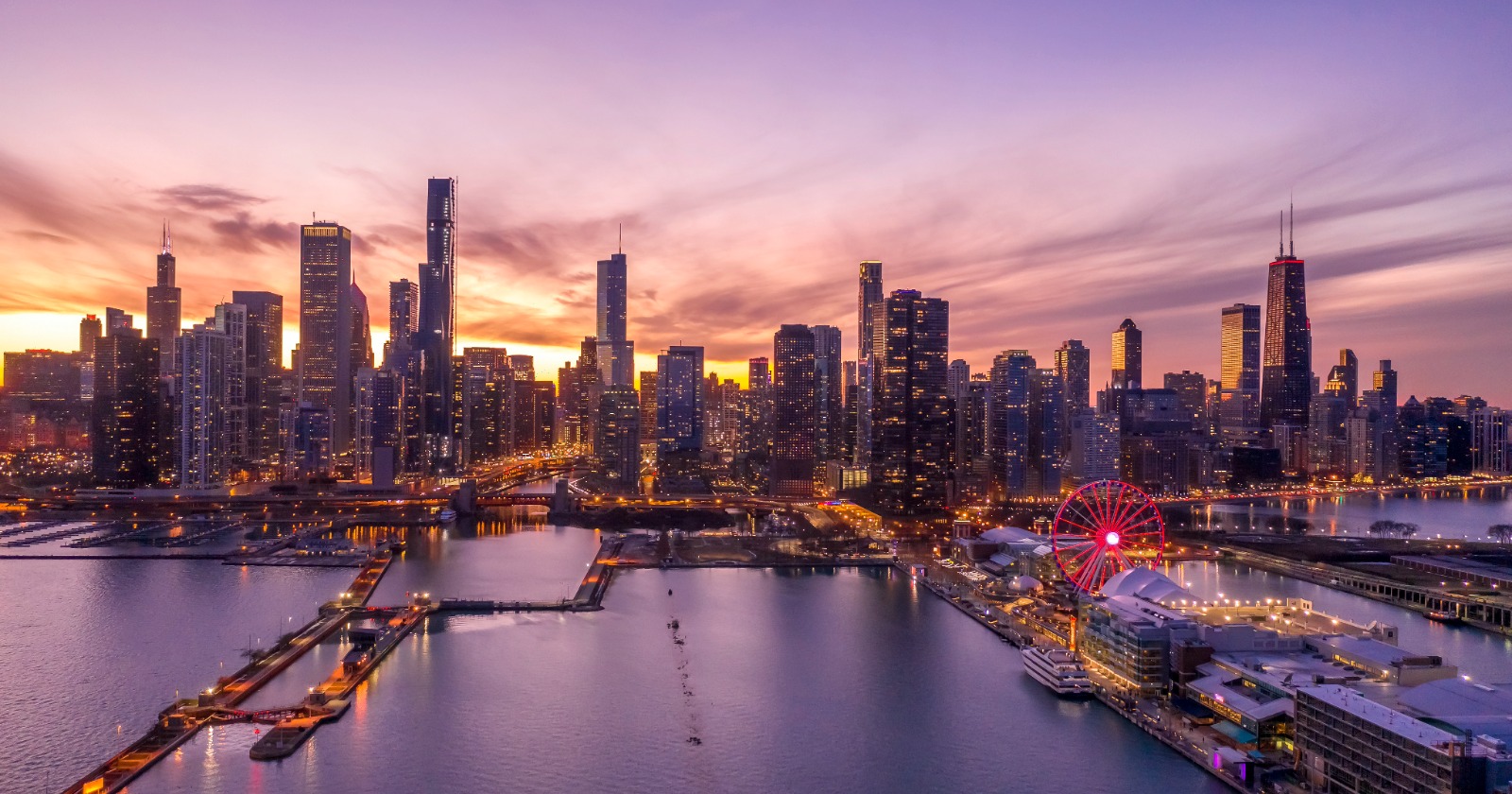
Chicago's stagnation is the other half of the equation. The metro has struggled with sustained domestic out-migration driven by high taxes, harsh winters, fiscal challenges at the state and city level, and the broader decline of the industrial Midwest economy that once anchored the region. Illinois has lost population in absolute terms in recent years, one of only a handful of states to do so, and the Chicago metro accounts for the majority of the state's population.
Chicago still has enormous strengths: a diversified economy, world-class universities, a major financial sector, and cultural institutions that rival any city in the country. But those strengths have not been enough to offset the outflow of residents to lower-tax, faster-growing metros in the South and West. DFW has been one of the primary beneficiaries of that outflow.
What comes after Chicago
Passing Chicago would make DFW the third-largest metro in the country, behind only New York and Los Angeles. And the projections suggest DFW will not stop there. According to CultureMap's reporting on a moveBuddha analysis of Census growth trends, if current population and migration trends hold, DFW could become the single largest metropolitan area in the country by 2100, reaching nearly 34 million residents, with Houston second and Austin third. That projection puts three Texas metros at the top of the national list, displacing New York, Los Angeles, and Chicago entirely.
Those century-out projections are highly speculative and depend on growth trends continuing for 75 years, which they may not. But the nearer-term milestone of passing Chicago is on much firmer ground. The gap is under a million people and shrinking by more than 100,000 a year.
The Fort Worth factor
One milestone has already been reached on the way to the larger crossover. According to a DFW growth assessment compiled in January 2026, Fort Worth surpassed 1 million residents in 2024, becoming the 11th largest city in the United States and making DFW the only US metro area with two cities exceeding one million inhabitants. Dallas itself has 1,329,491 residents and Fort Worth has reached 1,028,117 by the 2025 estimate. Having two million-plus cities within one metro is a structural feature that distinguishes DFW from Chicago, whose metro is anchored by a single dominant city of 2.7 million.
You can track both metros' populations and compare their full demographic profiles from 1990 to today on the Dallas-Fort Worth and Chicago metro pages, or put them side by side using the Compare tool.
Sources
Fort Worth Economic Development Partnership: DFW Growth Continues to Reshape the Nation's Largest Metros - 2025 Census estimates showing DFW at 8,477,157 and Chicago at 9,434,123, plus DFW's 11% growth since 2020.
Rice University Kinder Institute: How Dallas-Fort Worth Is Poised to Dominate America's Heartland - DFW reaching 10 million in the 2030s, Fortune 500 headquarters count, and net migration data.
City of Dallas Office of Economic Development: 2023 Dallas Fact Sheet - 2030 target to surpass Chicago as the third-largest metro.
Mynd Management: Investing in Dallas Real Estate - Projection of DFW reaching 10 million by the 2030s and displacing Chicago.
CultureMap Fort Worth: DFW Could Be Biggest Metro by 2100 - moveBuddha long-range projections placing DFW first nationally by 2100.
DFW Places: Metroplex Growth Assessment - Fort Worth surpassing 1 million residents in 2024 and DFW becoming the only metro with two million-plus cities.
Add CensusEasy as a preferred source on Google to see our stories first.
 GENERAL
Before you move to Austin: what the census data says
Austin doubled in size since 1990 and home values jumped about 55% since 2020. Here's what the Census numbers actually show about the city, the metro, and the suburban ring before you make the move.
 GENERAL
St. Louis has lost 30% of its people since 1990, but the region around it hasn't
The city of St. Louis had 278,144 residents in 2025, down from 396,685 in 1990. The metro area grew over the same period, and nearly all the loss is inside city limits that haven't changed since 1876.
 GENERAL
Black household income rises 76% since 1967, but dollar gap with White households widens
Census figures back to 1967 show Black median household income up 76.2 percent after inflation, to $59,980. The ratio to non-Hispanic White income narrowed, but the gap in dollars grew to $36,730.
When will Dallas-Fort Worth pass Chicago?
Most projections say Dallas-Fort Worth will pass Chicago in the early 2030s, with the most commonly cited window running from about 2030 to 2034. The exact year varies by source, but the consensus is that the crossover is close.
How close is Dallas-Fort Worth to Chicago right now?
Dallas-Fort Worth has about 8.48 million residents, while Chicago has about 9.43 million. That leaves a gap of roughly 957,000 people, and DFW is closing it quickly.
Why is Dallas-Fort Worth growing so fast?
DFW is growing fast because it keeps attracting migrants from other parts of the U.S., has a strong corporate base, and has a younger population that adds more residents through natural increase as well as migration. It has also become a major headquarters hub for large companies.