
Where the Black Middle Class Is Growing in America

See more of our coverage in your search results.
The Black middle class in America is growing, and it is growing in specific places. The story of where traces a clear pattern: a sustained migration toward Southern metros, a movement from cities into suburbs, and the emergence of a handful of regions that have become national centers of Black economic mobility. The Census data shows this clearly, and it runs counter to a lot of assumptions about where Black prosperity is concentrated in the United States.

The South is where the growth is happening
For most of the twentieth century, the Great Migration moved millions of Black Americans out of the rural South and into the industrial cities of the North and Midwest. Over the past three decades, that flow has reversed. According to the North American Community Hub's analysis of Census data, as Northern cities deindustrialized and job markets declined, Southern metro areas such as Atlanta, Charlotte, Dallas, Houston, and Raleigh began to boom, offering more competitive job opportunities in healthcare, technology, and service sectors, while the South's lower housing and living costs made it more feasible for families to purchase homes and build wealth.
The migration numbers confirm the trend. According to BlackDemographics.com's analysis of Census Bureau population estimates, the Dallas-Fort Worth metro led all metros in Black population growth between 2020 and 2023, adding a net 129,155 Black residents, driven by job opportunities in technology, finance, and healthcare combined with a relatively affordable cost of living. Atlanta and Houston followed closely, with Atlanta also drawing significant African and Caribbean immigration.
Washington DC and Atlanta lead on income
When you measure by Black median household income rather than raw population growth, two metros stand out. According to the Economic Policy Institute's analysis of 2023 American Community Survey data, Black median household income was highest in the Washington DC metro at $89,912 and the Atlanta metro at $70,969. Metro DC's Black median household income was significantly higher than the overall national median of $77,719, a remarkable figure that reflects the region's combination of federal employment, a highly educated Black professional class, and decades of established Black wealth.
According to the same EPI analysis, Black households in the New York metro at $65,758 and the Dallas metro at $63,376 also had substantially higher median incomes than the typical Black household nationwide. The relatively higher incomes and lower unemployment in metro DC and Atlanta are consistent with the fact that these places also had the largest shares of highly educated Black workers.
The growth trend is encouraging. According to EPI, while overall real median household income declined 1.1% between 2019 and 2023, Black median household income grew by 2.8%, with Black median income growth outpacing total income growth in six of ten observed metro areas including Miami, Atlanta, Chicago, Detroit, Philadelphia, and Dallas.
Prince George's County: the wealthiest majority-Black county
No single place better represents the established Black middle class than Prince George's County, Maryland, in the Washington DC suburbs. The county has a population of 970,374, a median household income of $101,798, a median home value of $426,000, and a poverty rate of 10.8% below the national average. Prince George's is the most affluent majority-Black county in the United States and has been for years, a place where Black households have built generational wealth through homeownership in a high-income region anchored by federal employment.
Within the county, communities like Bowie show what concentrated Black middle and upper-middle class prosperity looks like in the data: a median household income of $141,995, a median home value of $459,300, and a poverty rate of just 3.8%. These are not numbers that match the national narrative about Black economic disadvantage, and that is precisely the point. The Black middle class is real, it is large, and in places like Prince George's County it has reached income levels that exceed the national median for all households.
Atlanta's suburbs: the Black Mecca expands outward
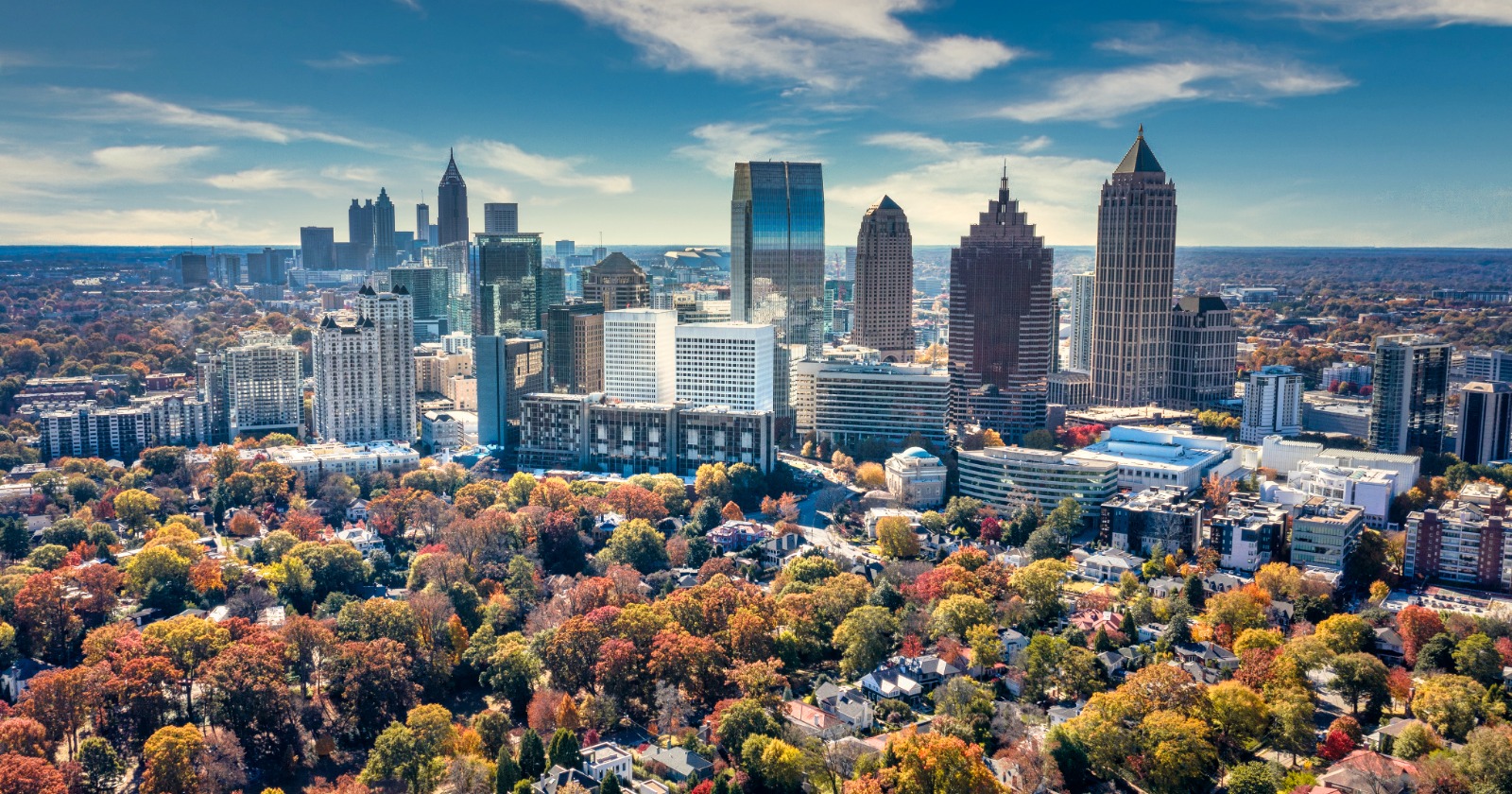
Atlanta has been called the Black Mecca for decades, anchored by historically Black colleges including Morehouse and Spelman that have produced generations of Black professional and political leadership. But the most interesting recent development is the movement of the Black middle class out of the city of Atlanta proper and into the suburban counties south and east of the city.
South Fulton, a city that incorporated in 2017 in southern Fulton County, has a population of 112,820, a median household income of $82,324, and a poverty rate of 9.1%. It is one of the largest majority-Black cities in the country and represents a deliberate consolidation of Black suburban communities into a single municipality. DeKalb County, east of Atlanta, has a median household income of $80,644 and has long been a center of Black middle-class suburban life. These communities reflect a pattern where the Black middle class is increasingly suburban rather than urban, mirroring the broader American suburbanization trend but with its own specific geography.
Homeownership: the Southern advantage
Homeownership is the foundation of middle-class wealth, and the data on Black homeownership reveals the Southern advantage starkly. According to LendingTree's analysis of 2024 American Community Survey data, the Atlanta metro tops the list for Black homeownership among the 50 largest metros at 55.3%, followed by Birmingham, Alabama at 54.1%, Richmond, Virginia at 52.8%, Washington DC at 52.5%, and Miami at 52.0%. Those are the only five major metros where Black homeownership exceeds 50%.
At the opposite end, according to the same LendingTree analysis, San Jose, California at 29.2%, Minneapolis at 30.1%, and Fresno, California at 30.5% rank lowest for Black homeownership among the 50 largest metros, with Los Angeles, New York, and Seattle also in the bottom ten. The pattern is unmistakable: Black homeownership, and therefore Black middle-class wealth building, is strongest in the affordable South and weakest in the expensive coastal metros.
According to BlackDemographics.com's analysis of Census data, one standout is Port St. Lucie, Florida, which reports a 70% Black homeownership rate, far above the national average, driven by affordable housing and an influx of Black middle-class families from larger urban centers like Miami and the Northeast, many of them retirees or working families seeking single-family homes in a quieter, more affordable area. Port St. Lucie has a median household income of $80,648 and a poverty rate of 9.5%.
Why the coastal cities are losing Black middle-class families
The flip side of Southern growth is coastal decline. The expensive metros of the Northeast and West Coast have become increasingly inaccessible to middle-income Black households, just as they have for middle-income households of all backgrounds. According to the Manhattan Institute, Black homeownership rates are at least 20% higher in cities like Atlanta, Nashville, and Charlotte compared to the more glamorous coastal cities, and adjusted for income, homes are less than half as expensive for Black households in metropolitan Atlanta or Dallas-Fort Worth compared with Los Angeles and the Bay Area.
That affordability gap is the engine of the migration. A Black professional family that can buy a four-bedroom house in a good school district in suburban Atlanta or Dallas for a fraction of what a comparable home costs in the Bay Area or New York is making a rational wealth-building decision. Over a generation, those decisions compound into the demographic shift the Census data now records: a Black middle class that is increasingly Southern, increasingly suburban, and increasingly anchored in homeownership.
What the data tells us
The geography of Black middle-class growth in America points clearly toward the South and toward the suburbs. Washington DC and Atlanta lead on income, Dallas leads on population growth, Prince George's County represents the established wealth ceiling, and Southern metros across the board lead on the homeownership that builds lasting wealth. The coastal cities that dominate national cultural attention are, by these measures, the places where Black middle-class families are finding it hardest to establish themselves.
You can explore the demographic and income data for any of these metros, cities, and counties going back to 1990 on CensusEasy, or compare any two places directly using the Compare tool.
Sources
Economic Policy Institute: A Tale of 10 Cities - Black median household income by metro (DC $89,912, Atlanta $70,969) and income growth data from the 2023 American Community Survey.
LendingTree: Black Americans Homeownership Trends - Black homeownership rates by metro from the 2024 American Community Survey.
BlackDemographics.com: Top 5 Cities for Black Population Growth - Dallas-Fort Worth Black population gain of 129,155 from Census Bureau estimates.
BlackDemographics.com: Best and Worst Cities for Black Homeownership - Port St. Lucie 70% homeownership rate and Southern homeownership patterns.
North American Community Hub: Black Population in the United States by County - Migration patterns and the reversal of the Great Migration toward Southern metros.
Manhattan Institute: Elite Cities Are Squeezing Out the Middle Class - Comparison of Black homeownership rates and affordability between Southern and coastal metros.
Add CensusEasy as a preferred source on Google to see our stories first.
 GENERAL
Black household income rises 76% since 1967, but dollar gap with White households widens
Census figures back to 1967 show Black median household income up 76.2 percent after inflation, to $59,980. The ratio to non-Hispanic White income narrowed, but the gap in dollars grew to $36,730.
 GENERAL
These U.S. counties have the highest housing vacancy rates, but they're not abandoned
Sixty-one percent of housing in Summit County, Colorado is vacant. That's Breckenridge, not a ghost town. Every county at the top of the vacancy list is a vacation destination.
 GENERAL
The area codes with the most people
Hawaii's 808 is the most populous area code covering a whole state, with 1.43 million residents. Arizona averages 1.5 million people per code. Here is every state's area codes and residents per code.
Where is the Black middle class growing the most in America?
The Black middle class is growing most in Southern metros, especially Atlanta, Charlotte, Dallas, Houston, and Raleigh, with strong growth also showing up in suburban counties around those cities. The trend is increasingly suburban and increasingly tied to homeownership.
Which metros lead in Black population growth?
Dallas-Fort Worth led all metros in Black population growth between 2020 and 2023, followed by Atlanta and Houston. These places have attracted Black households through job growth, lower housing costs, and stronger homeownership opportunities.
Why is Atlanta such an important city for Black mobility?
Atlanta combines a large Black professional class, historically Black colleges, strong homeownership in the suburbs, and a diversified economy. It has long been a center of Black upward mobility, and that influence now extends strongly into suburban counties.