The most Indian communities in America are in one corner of New Jersey
See more of our coverage in your search results.
The most Indian community in America is a place most Americans have never heard of. Monmouth Junction, New Jersey, an unincorporated community in South Brunswick, is 46.6 percent Indian, and it has many neighbors with similar high numbers. Seven of the eight most Indian places in the country sit in one short stretch of central New Jersey.
| Rank | Place | Indian share | Population |
|---|---|---|---|
| 1 | Monmouth Junction, NJ | 46.6% | 9,141 |
| 2 | Princeton Meadows, NJ | 45.5% | 15,561 |
| 3 | Belle Mead, NJ | 44.7% | 6,394 |
| 4 | Loudoun Valley Estates, VA | 40.8% | 10,271 |
| 5 | Dayton, NJ | 40.4% | 7,952 |
| 6 | Iselin, NJ | 40.2% | 19,551 |
| 7 | Troy Hills, NJ | 39.3% | 5,179 |
| 8 | Heathcote, NJ | 38.2% | 7,717 |
| 9 | Mountain House, CA | 36.9% | 25,315 |
| 10 | South Barrington, IL | 35.4% | 5,071 |
The Route 1 corridor
Everyone knows Edison and Iselin as the famous Indian centers in New Jersey, with Oak Tree Road serving as one of the best places in America for a Little India downtown. But the highest concentrations have moved past the well-known places, into the townships and planned developments along the Route 1 corridor between New Brunswick and Princeton: Monmouth Junction, Dayton, and Heathcote are all pieces of South Brunswick, with Princeton Meadows and Belle Mead just beyond.
The draw for these Indian families is a familiar suburban formula in a specific corridor: pharmaceutical and finance employers between New York and Philadelphia, commuter rail into Manhattan, and school districts with strong reputations. The first generation settled in Edison. Their children, and newer arrivals with tech and professional jobs, bought newer houses one or two exits south. It's the same outward march we've traced in Korean New Jersey and the Chinese San Gabriel Valley: the enclave that everyone knows is rarely the statistical peak.
The tech-hub map beyond New Jersey
Outside the New Jersey corridor, the table reads like a map of American tech employment. Mountain House, California, at 36.9 percent, is a brand-new planned city on the far edge of the Bay Area, where Silicon Valley workers priced out of the valley are buying new construction. Loudoun Valley Estates sits in the data-center country of northern Virginia. Morrisville, North Carolina, at 34.1 percent, borders Research Triangle Park, and Parsippany anchors the corporate office belt of northern New Jersey.
Among big cities, the leader is Fremont, California, at 29.9 percent Indian in a city of 226,442, which makes it the largest heavily Indian city in the country by a wide margin. Indian Americans are now among the largest and fastest-growing immigrant-origin groups in the US, and the geography here reflects what drives it: employer-sponsored and student migration concentrated around technology, pharma, and research hubs.
The full list of every place is at highest Indian share cities, the count-based version of the story is in where the most Indian Americans live, and the national profile is on the Indian Americans page.
Sources
Figures are people of Asian Indian origin from the U.S. Census Bureau American Community Survey 5-year estimates, table B02015, as a share of total population, for places with at least 5,000 residents. Several entries, including Monmouth Junction and Princeton Meadows, are census-designated places rather than incorporated cities. Shares for small places carry wider margins of error than large ones.
Add CensusEasy as a preferred source on Google to see our stories first.
 GENERAL
Business applications hit a September record, and hiring plans ticked up for the first time this year
Americans filed 534,947 business applications in September, the most for any September since 2004. Applications with planned wages rose for the first time in 2026, and Missouri jumped 22.1 percent.
 GENERAL
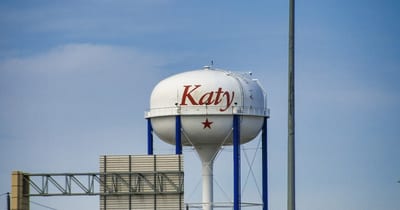
The most populated ZIP code in every state, led by Katy's 77494
Katy, Texas's 77494 has 140,157 residents, the most of any ZIP code in America, just ahead of Lakewood, New Jersey's 08701. Here is the biggest ZIP code in all 50 states and D.C.
 GENERAL
Nearly 56,000 comments filed on the 2030 census noncitizen rule as critics expect a court fight
The proposal to leave noncitizens without green cards out of the 2030 apportionment count has drawn 55,915 public comments. The deadline moved to November 2, and opponents say the rule will likely end up in court.
What is the most Indian city in America?
Monmouth Junction, New Jersey, an unincorporated community in South Brunswick, has the highest Indian share of any US place with at least 5,000 residents, at 46.6 percent. Princeton Meadows follows at 45.5 percent, and seven of the top eight places sit in central New Jersey along the Route 1 corridor.
Which large city has the biggest Indian population share?
Fremont, California, where 29.9 percent of 226,442 residents are of Indian origin, making it the most heavily Indian big city in the country. Morrisville, North Carolina, next to Research Triangle Park, reaches 34.1 percent in a mid-sized city, and Parsippany, New Jersey is at 31.3 percent.
Why is central New Jersey the center of Indian America?
The Route 1 corridor between New Brunswick and Princeton combines pharmaceutical and finance employers, commuter rail to Manhattan, and well-regarded school districts. The first generation settled in Edison and Iselin, and later families moved to newer developments a few exits south, pushing the statistical peak past the famous enclaves into places like Monmouth Junction and Dayton.