How many noncitizens live in the US?

See more of our coverage in your search results.
About 23.2 million people living in the U.S. are not citizens, according to the Census Bureau's 2025 American Community Survey. That's 6.8 percent of the country's 341.8 million residents. The survey's margin of error on that count is about 176,000 people either way.
Noncitizens are a minority of immigrants. The U.S. has about 50.4 million residents born in other countries, and 27.2 million of them have become citizens. So about 46 percent of immigrants are not citizens, down from 52 percent a decade earlier.
The noncitizen count has grown slowly. In 2015 it was 22.6 million, so it rose by about 637,000 in 10 years, a change larger than the survey's margins of error. Over the same years, the number of naturalized citizens grew by about 6.5 million. Because the population grew faster than the noncitizen count, the noncitizen share fell slightly, from 7.0 percent to 6.8 percent.
| Rank | State | Noncitizens | Share of residents |
|---|---|---|---|
| 1 | California | 4,570,792 | 11.6% |
| 2 | Texas | 3,195,757 | 10.1% |
| 3 | Florida | 2,253,411 | 9.6% |
| 4 | New York | 1,839,977 | 9.2% |
| 5 | New Jersey | 995,571 | 10.4% |
| 6 | Illinois | 912,515 | 7.2% |
| 7 | Georgia | 652,748 | 5.8% |
| 8 | Washington | 645,018 | 8.1% |
Four states hold just over half of all noncitizens: California, Texas, Florida, and New York, with about 11.9 million combined. California also has the highest share, 11.6 percent, followed by New Jersey at 10.4 percent. West Virginia has the lowest, under 1 percent.
The survey doesn't ask about legal status. "Noncitizen" covers green card holders, students and workers on visas, refugees and people granted asylum, and people in the country without authorization. The Pew Research Center, which builds its estimates partly from Census survey data, put the unauthorized immigrant population at a record 14 million in 2023, or 4.1 percent of the U.S. population. Its method differs from the ACS count, so the two figures can't simply be subtracted.
The number matters for the next census. The Trump administration's proposed rule for 2030 would leave many noncitizens out of the count used to divide House seats, which would be a break from every census since 1790. For where all immigrants live, citizens or not, see what share of the U.S. population was born abroad.
Sources
U.S. Census Bureau, American Community Survey 1-year estimates for 2015 and 2025, table B05001 (nativity and citizenship status), via the Census Bureau's data API. State shares use the same table's total population. Margins of error are at 90 percent confidence. Unauthorized immigrant estimate from the Pew Research Center, "U.S. unauthorized immigrant population reached a record 14 million in 2023" (August 21, 2025).
Add CensusEasy as a preferred source on Google to see our stories first.
 GENERAL
How many professional athletes are there in the US?
The Bureau of Labor Statistics counts about 15,070 athletes and sports competitors on U.S. payrolls, with a median salary of $66,710. Coaches and scouts outnumber them more than 16 to 1.
 GENERAL
Is that Census Bureau call, letter, or visit real? How to check
The Census Bureau runs more than 100 surveys and contacts millions of households a year. Here's how to verify a call, letter, email, text, or visitor, and the phone numbers the bureau actually uses.
 GENERAL
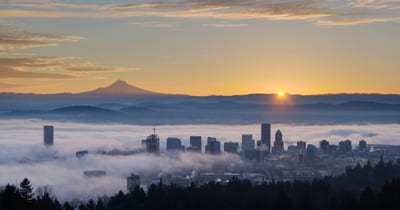
The Portland metro area is growing again after losing people in 2021 and 2022
The Portland metro area had 2,542,282 residents in 2025, the 26th largest in the U.S. It has grown three years in a row as moves out of the region slowed.
How many noncitizens live in the United States?
About 23.2 million people living in the U.S. were not citizens in 2025, or 6.8 percent of residents, according to the Census Bureau's American Community Survey. The margin of error is about 176,000.
Does the census count noncitizens?
Yes. Every census since 1790 has counted all residents, including noncitizens. A proposed rule for the 2030 census would leave many noncitizens out of the count used to divide House seats.
Which state has the most noncitizens?
California has the most, about 4.6 million, or 11.6 percent of its residents, Census data show. Texas, Florida, and New York follow, and those four states hold just over half of all noncitizens.