
Gen Z is now the largest generation in 20 states, and baby boomers still lead 16
Millennials are the biggest generation in the country, but they lead in only 14 states and the District of Columbia. Utah is about 27% Gen Z, and 1 in 4 Maine residents is a baby boomer.

See more of our coverage in your search results.
Gen Z is the largest generation in 20 states and baby boomers are the largest in 16, even though millennials outnumber both nationally, according to U.S. Census Bureau population estimates for July 1, 2025.
Millennials lead in the other 14 states and the District of Columbia. The country as a whole had about 73.1 million millennials, 72.2 million members of Gen Z, 66.6 million baby boomers, and 64.4 million members of Gen X, as our count of how many people are in each generation found. Gen X is not the largest generation in any state.
The Census Bureau does not define generations. These counts apply the birth years the Pew Research Center uses to the bureau's estimates by single year of age: baby boomers born 1946 to 1964, Gen X 1965 to 1980, millennials 1981 to 1996, and Gen Z 1997 to 2012. In 2025 that made Gen Z ages 13 to 28, millennials 29 to 44, Gen X 45 to 60, and boomers 61 to 79.
Utah is the most Gen Z state. About 26.8% of its residents, or 947,915 people, belong to the generation, roughly 170,000 more than its millennials. Only 13.6% of Utah residents are baby boomers, the lowest share in the country. North Dakota (23.3%), the District of Columbia (23.2%), Texas (22.8%), and Idaho (22.6%) have the next-highest Gen Z shares.
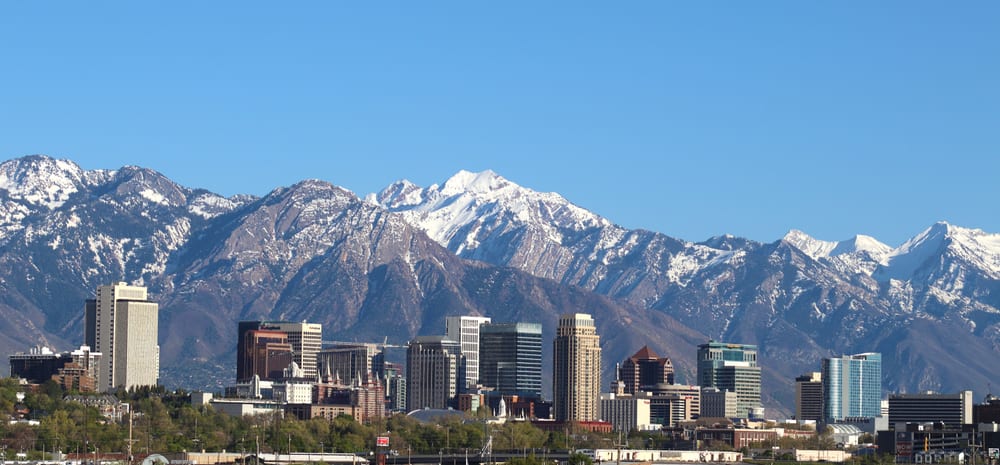
Half of the 20 Gen Z states are in the South: Texas, Georgia, North Carolina, Tennessee, Alabama, Arkansas, Kentucky, Louisiana, Mississippi, and Oklahoma. Seven are in the Midwest, from Indiana to the Dakotas, and the other three are Utah, Idaho, and Arizona. In Texas, the biggest of them, 7.25 million members of Gen Z edge out 7.15 million millennials by about 98,000 people.
Baby boomers lead in northern New England and in several states where retirees settle. About 1 in 4 residents of Maine is a boomer, 25.1%, the highest share in the country, followed by Vermont (24.6%), New Hampshire (24.3%), Delaware (23.7%), and West Virginia (23.0%). Florida has 5.27 million boomers, about 552,000 more than its millennials, the widest lead any generation holds in any state. Boomers are also the largest generation in Pennsylvania, Michigan, Ohio, and Wisconsin.
Millennials are most concentrated in the District of Columbia, where they make up 30.3% of residents, or 210,214 people. No generation has a larger share anywhere. Colorado (24.4%), Washington (23.8%), and Alaska (23.6%) come next. California has 8.94 million millennials, about 504,000 more than its Gen Z population, and New York, New Jersey, and Illinois are millennial states too.
Gen X comes closest in West Virginia, where its 351,788 members rank second behind the boomers. In every other state Gen X trails at least two of the other three: Gen Z, millennials, and boomers.
Some of the leads are too small to mean much. In Connecticut, the estimates put boomers ahead of millennials by 36 people out of 3.7 million residents. In Rhode Island, millennials lead boomers by 253. Boomers lead Gen Z by fewer than 3,500 people in New Mexico, Wyoming, and Ohio. The estimates are not published with margins of error, so gaps that narrow are best read as ties.
Following the same birth years from 2020 to 2025 shows where each generation is growing. The number of millennials rose in 42 states, a change that reflects moves between states, immigration, and deaths. Texas added about 588,000 millennials, a 9.0% gain, and Florida added about 515,000, or 12.2%, the fastest rate. California had about 182,000 fewer millennials in 2025 than in 2020 and New York about 173,000 fewer.
The District of Columbia lost 10.6% of its millennials over those five years, the steepest drop anywhere, while its Gen Z population grew 50.2% to 160,656. Louisiana and Mississippi were the only states to lose more than 1% of both generations.
Gen X shrank 1.3% nationally, by about 823,000 people, and grew in just 17 states. Florida gained about 296,000 members of Gen X, a 7.0% increase, while California lost about 419,000, or 5.3%.
The baby boom generation fell by 5.6 million people nationally, or 7.8%, mostly through deaths. It declined in every state but one. Delaware had 5,389 more boomers in 2025 than in 2020, a gain of 2.2%. Florida, South Carolina, and Idaho each lost less than 1%.
Generations in every state
States are ranked by the share of residents who belong to Gen Z. Each column shows a generation's share of the state's population on July 1, 2025.
| # | State | Largest generation | Gen Alpha | Gen Z | Millennials | Gen X | Baby boomers | Silent and older |
|---|---|---|---|---|---|---|---|---|
| 1 | Utah | Gen Z | 18.0% | 26.8% | 22.0% | 16.7% | 13.6% | 2.8% |
| 2 | North Dakota | Gen Z | 16.5% | 23.3% | 21.5% | 16.2% | 18.2% | 4.3% |
| 3 | District of Columbia | Millennials | 13.7% | 23.2% | 30.3% | 15.7% | 13.8% | 3.4% |
| 4 | Texas | Gen Z | 17.0% | 22.8% | 22.5% | 18.5% | 15.9% | 3.2% |
| 5 | Idaho | Gen Z | 16.1% | 22.6% | 20.4% | 17.6% | 19.1% | 4.2% |
| 6 | Kansas | Gen Z | 16.0% | 22.5% | 20.3% | 17.5% | 19.3% | 4.4% |
| 7 | Oklahoma | Gen Z | 16.3% | 22.4% | 20.8% | 17.8% | 18.7% | 4.1% |
| 8 | Nebraska | Gen Z | 16.8% | 22.3% | 20.7% | 17.3% | 18.7% | 4.2% |
| 9 | Georgia | Gen Z | 15.5% | 22.0% | 21.5% | 19.6% | 17.8% | 3.6% |
| 10 | Alaska | Millennials | 16.6% | 21.9% | 23.6% | 17.5% | 17.7% | 2.7% |
| 11 | Indiana | Gen Z | 15.9% | 21.8% | 20.4% | 18.6% | 19.2% | 4.1% |
| 12 | Mississippi | Gen Z | 15.6% | 21.7% | 19.2% | 18.9% | 20.3% | 4.2% |
| 13 | Arizona | Gen Z | 14.6% | 21.7% | 20.5% | 17.8% | 20.4% | 5.0% |
| 14 | Iowa | Gen Z | 15.6% | 21.7% | 19.9% | 17.8% | 20.2% | 4.9% |
| 15 | South Dakota | Gen Z | 16.7% | 21.6% | 20.1% | 17.2% | 20.0% | 4.4% |
| 16 | Arkansas | Gen Z | 15.8% | 21.5% | 20.2% | 18.5% | 19.7% | 4.3% |
| 17 | New Mexico | Baby boomers | 14.2% | 21.5% | 20.5% | 17.7% | 21.6% | 4.6% |
| 18 | Colorado | Millennials | 14.2% | 21.5% | 24.4% | 18.3% | 17.9% | 3.7% |
| 19 | California | Millennials | 14.5% | 21.4% | 22.7% | 19.2% | 18.0% | 4.2% |
| 20 | Alabama | Gen Z | 15.2% | 21.4% | 19.7% | 19.1% | 20.3% | 4.3% |
| 21 | Louisiana | Gen Z | 16.1% | 21.3% | 20.5% | 18.3% | 19.7% | 4.0% |
| 22 | Massachusetts | Millennials | 13.0% | 21.2% | 21.7% | 19.0% | 20.3% | 4.8% |
| 23 | North Carolina | Gen Z | 14.9% | 21.2% | 20.8% | 19.2% | 19.7% | 4.2% |
| 24 | Virginia | Millennials | 14.8% | 21.1% | 21.6% | 19.2% | 19.2% | 4.2% |
| 25 | Illinois | Millennials | 14.3% | 21.1% | 21.5% | 19.3% | 19.2% | 4.4% |
| 26 | Wyoming | Baby boomers | 14.9% | 21.1% | 20.4% | 17.9% | 21.5% | 4.2% |
| 27 | Missouri | Gen Z | 15.3% | 21.1% | 20.6% | 18.3% | 20.3% | 4.5% |
| 28 | Tennessee | Gen Z | 15.3% | 21.1% | 20.9% | 19.1% | 19.6% | 4.1% |
| 29 | Kentucky | Gen Z | 15.6% | 21.0% | 20.2% | 19.3% | 19.9% | 4.0% |
| 30 | New York | Millennials | 13.8% | 20.9% | 21.9% | 19.0% | 19.7% | 4.8% |
| 31 | Rhode Island | Millennials | 12.4% | 20.9% | 21.5% | 18.9% | 21.5% | 4.9% |
| 32 | Minnesota | Millennials | 15.5% | 20.7% | 21.4% | 18.2% | 19.7% | 4.5% |
| 33 | Ohio | Baby boomers | 15.0% | 20.7% | 20.3% | 18.7% | 20.7% | 4.6% |
| 34 | Wisconsin | Baby boomers | 14.2% | 20.6% | 20.2% | 18.7% | 21.6% | 4.7% |
| 35 | Michigan | Baby boomers | 14.2% | 20.6% | 20.3% | 19.0% | 21.3% | 4.6% |
| 36 | Washington | Millennials | 14.4% | 20.5% | 23.8% | 18.4% | 18.7% | 4.1% |
| 37 | South Carolina | Baby boomers | 14.5% | 20.4% | 19.8% | 18.9% | 21.8% | 4.6% |
| 38 | Maryland | Millennials | 15.0% | 20.3% | 21.8% | 19.5% | 19.2% | 4.3% |
| 39 | Montana | Baby boomers | 14.1% | 20.3% | 20.6% | 17.7% | 22.6% | 4.8% |
| 40 | Connecticut | Baby boomers | 13.5% | 20.3% | 20.8% | 19.6% | 20.8% | 5.0% |
| 41 | Nevada | Millennials | 14.5% | 20.2% | 22.7% | 19.5% | 19.3% | 3.9% |
| 42 | Pennsylvania | Baby boomers | 13.8% | 20.1% | 20.5% | 18.8% | 21.7% | 5.1% |
| 43 | New Jersey | Millennials | 14.7% | 20.1% | 21.6% | 19.9% | 19.2% | 4.4% |
| 44 | Oregon | Millennials | 13.1% | 19.9% | 22.4% | 18.9% | 20.9% | 4.8% |
| 45 | Delaware | Baby boomers | 13.9% | 19.9% | 19.4% | 18.3% | 23.7% | 4.9% |
| 46 | West Virginia | Baby boomers | 13.5% | 19.7% | 18.9% | 19.9% | 23.0% | 4.9% |
| 47 | Vermont | Baby boomers | 11.6% | 19.3% | 19.9% | 19.3% | 24.6% | 5.4% |
| 48 | Hawaii | Baby boomers | 14.1% | 19.1% | 20.5% | 18.7% | 21.7% | 6.0% |
| 49 | Florida | Baby boomers | 13.3% | 19.0% | 20.1% | 19.3% | 22.5% | 5.8% |
| 50 | New Hampshire | Baby boomers | 12.0% | 18.6% | 20.4% | 19.7% | 24.3% | 5.0% |
| 51 | Maine | Baby boomers | 12.0% | 18.1% | 20.0% | 19.3% | 25.1% | 5.5% |
Add CensusEasy as a preferred source on Google to see our work first.
What is the largest generation in the US?
Millennials, with about 73.1 million people in 2025, followed by Gen Z at 72.2 million and baby boomers at 66.6 million, based on Census Bureau estimates by age. State by state it differs: Gen Z is the largest generation in 20 states and baby boomers in 16.
Which state has the most Gen Z residents?
California has the most, about 8.4 million, followed by Texas with about 7.2 million. Utah has the highest share: 26.8% of its residents were Gen Z in 2025, ahead of North Dakota at 23.3% and the District of Columbia at 23.2%.
Which state has the highest share of baby boomers?
Maine, where 25.1% of residents were baby boomers in 2025, followed by Vermont (24.6%), New Hampshire (24.3%), and Delaware (23.7%). California has the most boomers, about 7.1 million, and Utah has the lowest share, 13.6%.
Population counts come from the Census Bureau's Vintage 2025 state population estimates by single year of age (file SC-EST2025-ALLDATA6), which cover the resident population of the 50 states and the District of Columbia on July 1 of each year from 2020 to 2025. Puerto Rico is not included.
The Census Bureau does not define generations. The birth years used here are the Pew Research Center's: baby boomers 1946 to 1964, Gen X 1965 to 1980, millennials 1981 to 1996, and Gen Z 1997 to 2012. People born in 2013 or later are grouped as Gen Alpha, a label with no agreed end year. Because the estimates are by age on July 1, birth year is approximated as 2025 minus age, so each generation's count can be off slightly at its boundaries. The estimates group everyone 85 and older together, so the Silent Generation and all older people are reported as one group, ages 80 and up.
The largest generation in each state is the one with the most residents. Changes from 2020 to 2025 compare the same birth years at both dates. Gen Z, for example, is ages 8 to 23 in the 2020 estimates and ages 13 to 28 in the 2025 estimates. Those changes combine moves between states, immigration, and deaths, and the estimates do not separate the three for individual ages.
Population estimates are revised every year and carry no published margins of error, so very small differences between two generations in a state should be treated as ties.
You may cite or republish these findings, and the downloadable dataset is licensed under CC BY 4.0. Reuse requires that you credit CensusEasy and link back to this page so readers can verify the underlying data.
CensusEasy Data Team (2026). "Gen Z is now the largest generation in 20 states, and baby boomers still lead 16." CensusEasy. Retrieved from https://censuseasy.com/studies/largest-generation-in-every-state
U.S. Census Bureau, Vintage 2025 state population estimates by single year of age, sex, race, and Hispanic origin (SC-EST2025-ALLDATA6), resident population, July 1, 2020, through July 1, 2025. Generation birth years follow the Pew Research Center. National totals are in our post on how many people are in each generation. Top photo: crowds at the 2016 Iowa State Fair in Des Moines, by Phil Roeder, via Wikimedia Commons, licensed CC BY 2.0, cropped to fit. Salt Lake City photo: SLC Skyline 2024, by Invictus323, via Wikimedia Commons, licensed CC BY 4.0, resized.


CensusEasy publishes original research grounded in US Census Bureau data. Every study includes the underlying numbers, methodology, and sources so readers can verify or extend the analysis.
Data note. Figures in this report are derived from US Census Bureau and Bureau of Labor Statistics data, including American Community Survey estimates that carry sampling margins of error. This information is provided as is, for general informational purposes, without warranty of accuracy or completeness. CensusEasy is not affiliated with or endorsed by the US Census Bureau or any government agency. See our Terms of Use for details.