
General

Which Cities Have Become Less Diverse Since 2000?
The United States as a whole has become steadily more diverse since 2000. But a handful of individual cities have moved in the opposite direction, becoming less diverse rather than more. The mechanism is almost always the same: gentrification...

When Will Texas Surpass California in Population?
Most credible projections point to the same answer: Texas will surpass California as the most populous state in the United States around 2045 to 2050. The gap between the two states is large today, roughly 9 million people, but it has been closing steadily for two decades, and...

Where the Black Middle Class Is Growing in America
The Black middle class in America is growing, and it is growing in specific places. The story of where traces a clear pattern: a sustained migration toward Southern metros, a movement from cities into suburbs, and the emergence of a handful of regions that have become national centers of Black...

When Will Dallas-Fort Worth Surpass Chicago in Population?
The Dallas-Fort Worth metro is on track to pass Chicago as the third-largest metropolitan area in the United States, and most projections put the crossover in...
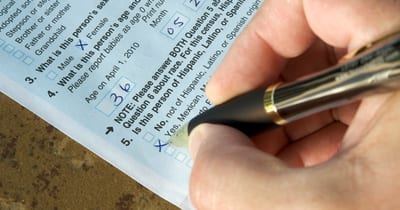
Who Gets the US Census?
The short answer is everyone. The US Census is designed to count every single person living in the United States - regardless of age, citizenship status, immigration status, race, or income. But the full answer involves some important distinctions about who counts where, which groups are historically undercounted, and a current political debate about whether that "everyone" rule should change for the 2030 Census...

What Is the Purpose of a Census?
The US Census exists because the Constitution requires it. Article I, Section 2 mandates an "actual Enumeration" of the population every ten years, and the original reason was simple: to divide political power fairly among the states. But the census has grown into something...

What Happens If You Don't Fill Out the Census?
Filling out the census is not optional, at least on paper. Federal law requires every US resident to participate in the decennial Census, and there are penalties on the books for refusal. But the practical reality of what actually happens if you don't respond is a lot more nuanced than the legal language suggests...

Which Race Is Increasing the Most in the United States?
The United States has been getting more racially and ethnically diverse with every Census count for decades. But not all groups are growing at the same pace, and the answer to which group is growing fastest depends on whether you measure by percentage growth rate or by raw numbers added. Both ways of looking at it tell an interesting story...

What Does Census Mean?
A census is an official count of an entire population. The word comes from Latin - specifically from censere, meaning "to assess" or "to estimate." According to...

Before You Move to Nashville: What the Census Data Says
Nashville has been one of the most talked-about relocation destinations in America for the past decade. The no-income-tax pitch, the music culture, the relative affordability compared to coastal cities - it all adds up to a compelling story. But the Census data tells a more complicated version of that story, one that includes a poverty rate that stays stubbornly above...

The 10 Richest Cities in Texas in 2026
Four Texas cities sit at the very top of the national list for median household income. That is not a typo. Southlake, University Park, West University Place, and Highland Park all hit the Census Bureau's reporting cap of $250,000, which puts them in a 45-way national tie for first. For a state whose identity is...

The Most Extreme Census Tracts in America
Most tracts are unremarkable in the statistical sense - middle of the distribution on income, density, poverty, home values. But the ones at the extremes tell stories that city-level or county-level data can never surface. A tract with 44,000 residents. A neighborhood where the median home value exceeds $2 million. A block where 0% of residents live in poverty. These places exist...

How to Use Census Data to Choose a Neighborhood
Most people choose a neighborhood the same way: they drive around, look at Zillow, maybe check a school rating site, and go with their gut. That process is fine for getting a general feel, but it leaves out a category of information that can matter enormously over a ten or twenty year homeownership horizon. Census data tells you not just what a neighborhood is today, but what direction it's been moving and how fast, and those are the two questions that a Saturday afternoon drive can't answer...