Aurora, Illinois households that skipped the special census online are now getting a knock on the door

See more of our coverage in your search results.
Census Bureau canvassers are going door to door in Aurora, Illinois, visiting households in the city's newer subdivisions that did not answer the 2026 Special Census online. The self-response window ran from July 23 to August 24. Field canvassing began August 24 and is scheduled to continue through November 13, according to the city's special census page.
The count covers about 3,945 housing units built between 2020 and 2026, with an estimated 10,705 residents, across all ten of the city's wards. It is not a full recount. Households in the affected areas received four mailings with a personal ID number for responding at the bureau's special census portal, and the city runs a hotline at (630) 256-6680 from 8 a.m. to 8 p.m. The city says canvassers carry visible identification and that responses are confidential and protected by federal law.
Aurora is paying the Census Bureau about $1 million for the count. Its reason is the 2020 census, which put the city's population at about 180,000 after the 2010 count of about 197,000. City officials dispute the loss in population. Mayor John Laesch told ABC7 Chicago in July: "We haven't lost any population. If anything we have gained significantly." The city says the lower figure costs Aurora more than $4.3 million a year in state and federal funding tied to population numbers, or about $43 million over the decade before the 2030 count.
Because the special census counts only new-construction areas, it cannot recover all of that. Communications director Jon Zaghloul told Patch on July 23: "Since this is not a full recount of the entire City, the City will not get $4.3 million back, nor is expecting to." The city expects more than $2 million if the count succeeds, and officials told the Chicago Tribune in January 2025 that adding roughly 1,000 residents would cover the $1 million cost.
Laesch tied the count to city services and to fear in immigrant neighborhoods. "Our police and fire staffing levels are all determined by that population count," he said, and added: "In Hispanic neighborhoods there has been a heavy presence of ICE in the City of Aurora. Some of those people don't feel safe being recounted." Chief of Staff Shannon Cameron said the form asks nothing about citizenship: "It's safe. It's confidential. There is no citizenship question on this at all."
A count delayed a year and a half
The special census was originally scheduled to open on February 3, 2025 and close March 7, 2025, under then-Mayor Richard Irvin. On January 30, 2025 the Census Bureau postponed it while awaiting new leadership at the agency after the change of administration, the Tribune reported, and gave the city no new date. The count started 17 months later under Laesch, who took office in 2025.
Aurora is the second-largest city in Illinois. The bureau's own estimates put its population at 179,898 in the 2020-2024 American Community Survey and 181,505 in the July 2025 population estimate. It is 41.6 percent Hispanic, 12.2 percent Asian, and 10.7 percent Black, and 26.4 percent of residents were born outside the United States. About a third of households rent.
Special censuses are conducted by the Census Bureau under contract with a local government, which pays the cost. Illinois distributes several revenue streams to municipalities on a per-resident basis, so cities that grew between decennial counts sometimes buy a count of the new areas rather than wait. The bureau ran a separate 2026 Census Test this year in other locations to try methods for 2030, including using Postal Service carriers as enumerators, covered in postal workers and census test confidentiality. What the law requires of households that do not respond is in what happens if you don't fill out the census, and the confidentiality rules are in is census data confidential.
Field canvassing in Aurora is scheduled to end November 13. The city has not said when it expects the bureau to certify the new count.
Sources
Dates, response methods, housing unit and population estimates, and the city's funding figures are from the City of Aurora's 2026 Special Census page, updated August 31, 2026. Quotes from Mayor John Laesch and Chief of Staff Shannon Cameron are from ABC7 Chicago, July 22, 2026. The quote from Jon Zaghloul and the $2 million figure are from Patch, July 23, 2026. The 2025 postponement, the $1 million cost, and the 1,000-resident break-even figure are from the Chicago Tribune, January 30, 2025. Aurora's population and demographic figures are from the U.S. Census Bureau's 2020-2024 American Community Survey and Vintage 2025 population estimates.
Add CensusEasy as a preferred source on Google to see our stories first.
 GENERAL
Where do the most Peruvian Americans live?
About 781,000 Americans are of Peruvian origin. Florida has the most, but the highest concentrations are in northern New Jersey, led by Kearny at 10.3 percent.
 GENERAL
Liam was the most popular boy name of the past 10 years
From 2016 through 2025, 202,601 baby boys were named Liam, more than any other name. Noah and Oliver round out the top three, while Henry climbed from 22nd to fifth.
 GENERAL
How big is every state capital?
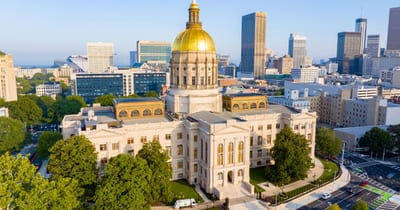
Phoenix is the largest state capital, at about 1.67 million people, and Montpelier, Vermont, the smallest, at about 7,800. Just 17 capitals are the biggest city in their state.
Why are census workers knocking on doors in Aurora, Illinois?
Aurora is conducting a 2026 Special Census of housing built between 2020 and 2026. The online response period ran from July 23 to August 24, 2026, and Census Bureau canvassers are visiting households that did not respond, from August 24 through November 13. The count covers about 3,945 housing units with an estimated 10,705 residents.
Is the Aurora special census the same as the 2026 Census Test?
No. The 2026 Census Test is a Census Bureau operation in other locations to try methods for the 2030 census. Aurora's special census is a count the city requested and is paying about $1 million for, conducted by the bureau under contract. Cities use special censuses to update their population between decennial counts because state funding is distributed per resident.
Is the special census confidential?
Yes. Responses are protected under the same federal law that covers the decennial census, Title 13, and the city says data is not shared with law enforcement or immigration authorities. Chief of Staff Shannon Cameron told ABC7 Chicago there is no citizenship question on the form. Official canvassers carry visible identification, and residents can respond by phone at (630) 256-6680 instead.