American Samoa could lose 61% of its people by 2100, new Census projections show
See more of our coverage in your search results.
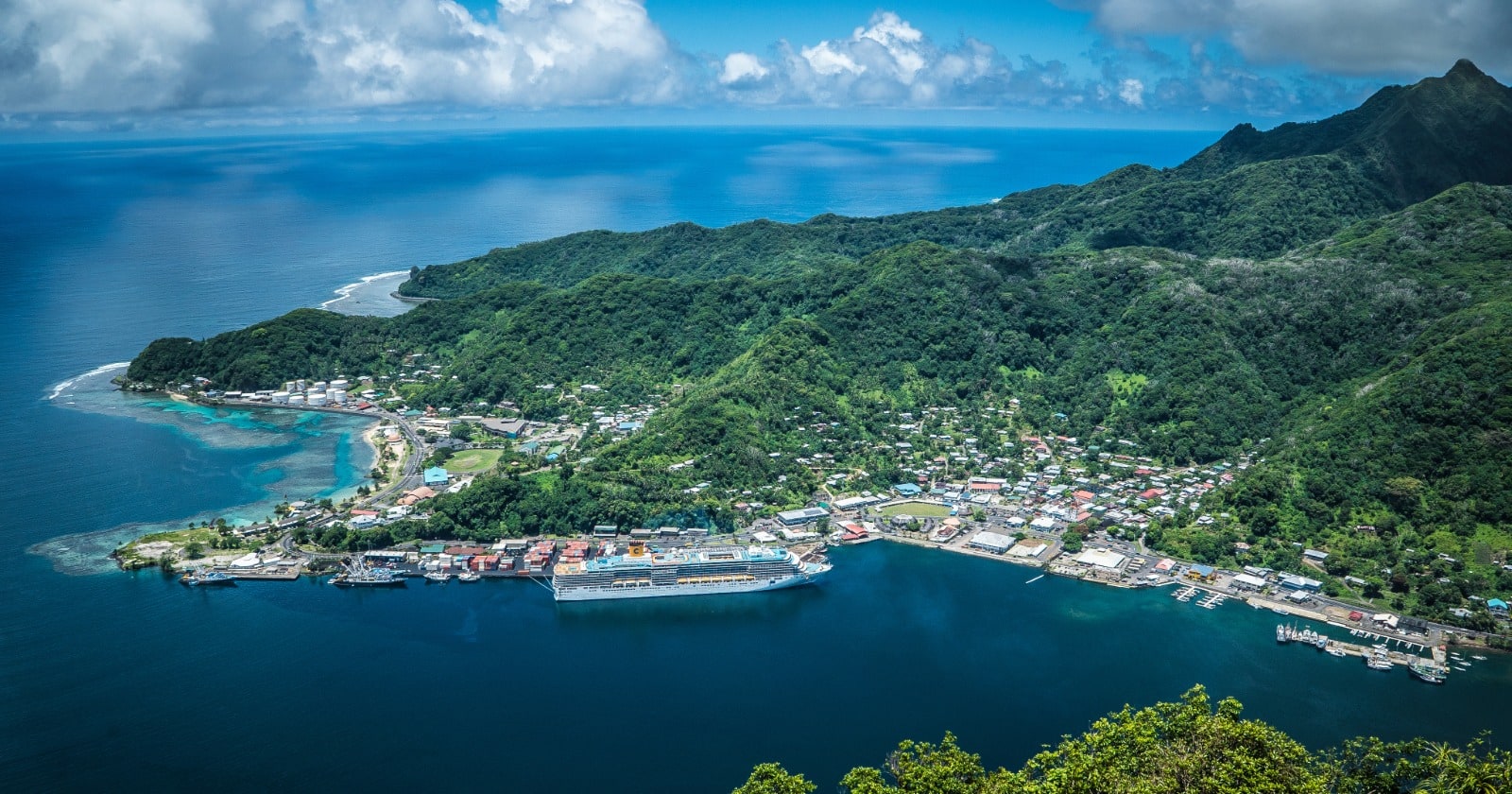
Four U.S. island territories in the Pacific and Caribbean are all projected to have fewer people in 2100 than they do today, and two could lose 40 percent or more of their residents. New projections from the U.S. Census Bureau, released November 5, show American Samoa falling from 44,190 people in 2026 to 17,332 by 2100, a drop of 61 percent. The U.S. Virgin Islands would fall 41 percent, from 83,896 to 49,331.
Guam, the largest of the four, would shrink 38 percent, from 160,544 to 99,617. The Northern Mariana Islands would fall 17 percent, from 46,250 to 38,317. Together, the four territories have about 335,000 residents today. The projections put them at about 205,000 by the end of the century.
| Rank | Territory | Population, 2026 | Projected, 2050 | Projected, 2100 | Change, 2026 to 2100 |
|---|---|---|---|---|---|
| 1 | American Samoa | 44,190 | 30,596 | 17,332 | −61% |
| 2 | U.S. Virgin Islands | 83,896 | 70,187 | 49,331 | −41% |
| 3 | Guam | 160,544 | 149,104 | 99,617 | −38% |
| 4 | Northern Mariana Islands | 46,250 | 42,825 | 38,317 | −17% |
Three of the four are already shrinking. American Samoa has lost about 21 percent of its population since 2010, when it had 56,101 people. The Virgin Islands had 108,359 residents in 2010 and lost about 23 percent since then, with its sharpest drop between 2010 and 2020. The Northern Mariana Islands have been declining since at least 2000, when they had 69,726 residents. Guam has grown slightly and is not projected to start losing people until 2030.
"Such long-term declines are driven by a combination of falling fertility and persistent outmigration," wrote Census Bureau demographers Sophia Magalona and Rachel J. Bacon.
Birth rates have dropped fast. A population needs a total fertility rate of about 2.1 children per woman to replace itself over time. American Samoa's rate fell from 4.0 in 2000 to 2.1 in 2026. The Northern Mariana Islands fell from 3.3 to 2.0 in about a decade, and the Virgin Islands fell from 2.5 in 2007 to 1.9. Guam is at 2.4, down from 3.2 in 2014. In the Virgin Islands, deaths could outnumber births as soon as 2027.
More people are also leaving than arriving. In 2026, American Samoa's net migration was a loss of 25.1 people for every 1,000 residents, compared with 11.2 in the Northern Mariana Islands, 5.4 in the Virgin Islands, and 4.8 in Guam. The bureau links the Virgin Islands' outmigration to the shutdown of the St. Croix oil refinery and the 2017 hurricanes Irma and Maria. The projections assume that net outmigration slowly falls to zero by 2100, so the declines would likely be steeper if people kept leaving at today's pace.
The same database projects the United States as a whole to keep growing, from about 339.5 million in 2026 to 365.6 million in 2100, an increase of about 8 percent. Our post on what the U.S. population will be in 2050 covers those national projections.
This is the first update of the territories' figures in the bureau's International Database since 2017. Puerto Rico, the largest territory, was not part of this release. Advocates for territory residents said the numbers deserve more attention. "If these dramatic population declines were predicted for any state, it would be front page national news," said Neil Weare, co-director of Right to Democracy.
Sources
U.S. Census Bureau, "Census Bureau Releases International Population Estimates and Projections," November 5, 2026; Sophia Magalona and Rachel J. Bacon, "New Estimates Show Population Decline in U.S. Territories Through 2100," November 5, 2026; and the International Database, midyear population and fertility estimates and projections. Quote from Neil Weare via the St. Thomas Source, November 6, 2026.
Add CensusEasy as a preferred source on Google to see our stories first.
 GENERAL
Henry County went from 88% white to majority Black in 35 years
Henry County, Georgia, south of Atlanta, was 88.2 percent white in 1990. Today it is 32.4 percent white and 51.2 percent Black, and its population has grown 351 percent.
 GENERAL
Why census numbers don't match, and which one to use
The 2020 census, the American Community Survey, and the Census Bureau's population estimates all count Americans, but they give different numbers. Here is what each one measures and when to use it.
 GENERAL
35.7 million adults cut back on food or medicine to pay energy bills, Census survey finds
About 15 percent of adults lived in households that cut back on food or medicine to pay an energy bill, and 12.5 percent couldn't pay a bill in full, according to new Census Bureau survey data.
Why is the population of the U.S. territories declining?
The Census Bureau says the declines come from falling fertility and persistent outmigration. In 2026, more people left than arrived in all four territories, and fertility rates in the Virgin Islands and Northern Mariana Islands are below replacement level.
What is the population of American Samoa?
The Census Bureau's International Database puts American Samoa's 2026 population at 44,190, down from 56,101 in 2010. It projects 30,596 people in 2050 and 17,332 in 2100, a 61 percent decline from today.
What is the population of the U.S. Virgin Islands?
The U.S. Virgin Islands had about 83,896 residents in 2026, according to the Census Bureau's International Database, down from 108,359 in 2010. The bureau projects 49,331 people by 2100, a 41 percent decline.