
Trump administration proposes major 2030 census changes to immigration and race data

See more of our coverage in your search results.
The Trump administration published its proposal for the 2030 census online Wednesday. It would exclude non-U.S. citizens without a green card from the apportionment counts, stop asking about race and ethnicity, and bar any question about sexual orientation, NPR's Hansi Lo Wang reported.
The document is the public version of a draft rule that WIRED described in August as circulating in interagency review, which we covered in the draft rule on undocumented immigrants and race questions. It traces back to a proposed rule the Commerce Department submitted in June under the title "Decennial Census of the Population of Americans, Proposed Residence Criteria and Proposed Regulations for Demographic Questions," with its contents unpublished at the time. The published proposal matches what advocacy groups predicted then.
The administration must send Congress a report on proposed 2030 question topics by April 1. Congress has final authority over the census under the Constitution, and the president does not.
What the apportionment change would do
The Fourteenth Amendment requires that House seats be apportioned by counting the "whole number of persons in each state." No census since 1790 has left out residents because of immigration status. The first Trump administration tried in 2020 to subtract residents without legal status from the apportionment counts and did not succeed, and it separately failed to add a citizenship question to the 2020 form.
Apportionment is close arithmetic. Each of the 435 House seats now represents about 770,000 people, and states routinely gain or lose a seat on margins of a few thousand residents. Removing any sizable group from a state's count moves seats and Electoral College votes with them.
The Census Bureau does not publish a count of noncitizens without green cards specifically. The closest published measure is the total noncitizen population: 22,716,619 people, or 6.7 percent of US residents. That figure still includes lawful permanent residents, who hold green cards and would keep being counted, so it is an upper bound on the group the proposal would remove.
| State | Noncitizens | Share of population |
|---|---|---|
| California | 4,841,377 | 12.3% |
| Texas | 3,080,983 | 10.2% |
| Florida | 2,088,458 | 9.3% |
| New York | 1,832,210 | 9.2% |
| New Jersey | 978,810 | 10.5% |
| Illinois | 892,321 | 7.0% |
| West Virginia | 14,690 | 0.8% |
California is 12.3 percent noncitizen and West Virginia 0.8 percent, so any rule keyed to immigration status shifts representation from the first kind of state toward the second. Missouri is among the states that have sued to have residents without legal status and people on nonimmigrant visas left out of census numbers, where such a change would move state legislative power from younger, more diverse urban areas toward older, whiter rural ones.
Dropping the race question
The census has asked about race since the first count in 1790. Removing the question would end the federal data used to draw districts, enforce the Voting Rights Act, and administer other antidiscrimination law.
This is the third turn in a long fight over those categories. The Biden administration revised the federal race and ethnicity standards in 2024 for the first time in more than 25 years, combining race and Hispanic origin into one question and adding a Middle Eastern or North African category. In May 2026 the Census Bureau dropped its plan to put those revisions into the American Community Survey in 2027, which we covered in the bureau scrapping its race and ethnicity overhaul. The Office of Management and Budget has pushed the compliance deadline for federal agencies to September 28, 2029.
The Heritage Foundation's Project 2025 agenda had urged a conservative administration to "thoroughly review any changes" to the census race questions, citing "concerns among conservatives that the data under Biden Administration proposals could be skewed to bolster progressive political agendas."
The proposal would also bar a sexual orientation question. The census has not asked one directly, though the 2020 form asked cohabiting couples to identify as opposite-sex or same-sex.
The 2026 Census Test, which ended August 31 in Huntsville, Alabama and Spartanburg County, South Carolina, used the 2020 race and ethnicity questions unchanged. That test is covered in postal workers and census test confidentiality. Census advocates say the proposal itself, whether or not it survives, could depress participation in 2030 among Latino residents, a group the bureau has historically undercounted.
How seats and Electoral College votes follow the count is laid out in how the census shapes American politics. A new administration taking office in 2029 could reverse any of these decisions before the count begins.
Sources
Reporting is from Hansi Lo Wang, "Trump officials propose sweeping changes to the census that would reshape voting maps", NPR, September 9, 2026, edited by Benjamin Swasey. The June proposed rule title and the WIRED description of the draft are from our earlier coverage. Noncitizen population figures are from the U.S. Census Bureau's 2020-2024 American Community Survey, table B05002, retrieved from the bureau's API on September 9, 2026. The noncitizen category includes lawful permanent residents, so it is larger than the group the proposal would exclude; the bureau does not publish a count of noncitizens without green cards. The figure of about 770,000 people per House seat is the 2024 resident population divided by 435.
Add CensusEasy as a preferred source on Google to see our stories first.
 GENERAL
Where do the most Peruvian Americans live?
About 781,000 Americans are of Peruvian origin. Florida has the most, but the highest concentrations are in northern New Jersey, led by Kearny at 10.3 percent.
 GENERAL
Liam was the most popular boy name of the past 10 years
From 2016 through 2025, 202,601 baby boys were named Liam, more than any other name. Noah and Oliver round out the top three, while Henry climbed from 22nd to fifth.
 GENERAL
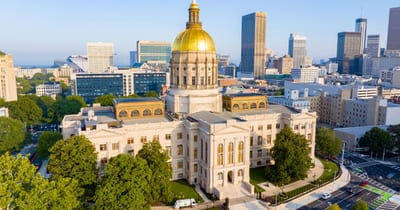
How big is every state capital?
Phoenix is the largest state capital, at about 1.67 million people, and Montpelier, Vermont, the smallest, at about 7,800. Just 17 capitals are the biggest city in their state.
What is in the Trump administration's 2030 census proposal?
Three main changes. Non-U.S. citizens without a green card would be excluded from the apportionment counts used to divide House seats and Electoral College votes among the states. The census would stop asking about race and ethnicity, a question it has included since 1790. And it would be barred from asking about sexual orientation. The proposal was published online on September 9, 2026.
Can the president change who the census counts?
Not alone. The Constitution gives Congress final authority over the census, and the Fourteenth Amendment requires apportionment to count the whole number of persons in each state. The first Trump administration tried to subtract residents without legal status from the 2020 apportionment counts and failed, and also failed to add a citizenship question. The administration must send Congress a report on 2030 question topics by April 1.
Which states would be most affected?
States with large noncitizen populations. California is 12.3 percent noncitizen and Texas, New Jersey, Florida, and New York all exceed 9 percent, while West Virginia is 0.8 percent. The 22.7 million noncitizens counted nationally are an upper bound, since the figure includes green card holders who would still be counted. Each House seat represents about 770,000 people, so shifts of a few thousand residents can move a seat.