
The 10 Fastest-Growing Cities in America in 2026
See more of our coverage in your search results.
Every year researchers and city planners study the same question: which American cities are actually growing, and what is driving them? The answer keeps pointing to the same regions. The Sun Belt, the Mountain West, and a handful of mid-sized metros with strong job markets and enough land to build on. The cities below are ranked by population growth since the 2020 decennial Census, using the most recent ACS data available. Some of the numbers are extraordinary.
1. Maricopa, Arizona
Maricopa sits at the top of this list by a margin that's hard to overstate. In 2000, it had 1,040 residents. By 2024 that number had reached 67,163, a growth rate of more than 6,300 percent in 24 years. It went from a small farm community to a full-sized city in the time it takes to raise a child from kindergarten to adulthood. Maricopa is about 35 miles south of Phoenix, which put it far enough from the metro core to have cheap land in the early 2000s while still being commutable to Phoenix employers. Median household income has reached $96,391, which reflects the working professional and young family demographic that fueled most of the growth. The city is still building, and its population density remains low enough that there is room for more.
2. Buckeye, Arizona
Buckeye sits on the western edge of the Phoenix metro and has followed a similar trajectory to Maricopa, adding nearly 100,000 residents since 1990 for a total growth rate of close to 2,000 percent. Its current population of 101,315 puts it firmly in mid-sized city territory, and with a median household income of $99,486 it's attracting the same profile of household that has driven growth across the Phoenix suburbs for the past two decades. The western edge of the metro had the most developable land left, and Buckeye has been absorbing Phoenix's growth overflow as the closer-in suburbs filled up. Industrial and logistics development along the I-10 corridor has also added jobs that don't require a downtown Phoenix commute.
3. Frisco, Texas
We've written a full piece on Frisco and its rise, because the story deserves more than a paragraph. The short version is that a city of 6,500 people in 1990 became a city of 230,620 by 2024, a 584 percent increase since 2020 alone. Frisco has the highest median household income on this list at $150,212, a figure driven by the corporate campuses, sports facilities, and high-earning professional class that followed the Dallas North Tollway north over the past 25 years. The PGA of America's national headquarters is there. The Dallas Cowboys practice there. It is no longer a suburb that grew fast. It's a city.
4. Meridian, Idaho
Meridian is the Boise metro's fastest-growing city and one of the most dramatic growth stories in the Mountain West. It added more than 120,000 residents since 1990, a 1,256 percent increase, and its population now stands at 132,142. The Boise metro attracted remote workers, retirees leaving California, and tech industry spillover during and after the COVID years, and Meridian captured a large share of that demand as the primary suburb with land and new housing inventory. Median household income sits at $100,795, reflecting a younger, dual-income demographic that chose Idaho partly for its relatively low cost of living compared to where many of them came from.
5. New Braunfels, Texas
New Braunfels is positioned between San Antonio and Austin on the I-35 corridor, which means it has been able to draw workers from both metro labor markets while offering home prices lower than either city. That geography has made it one of the most consistent growth markets in Texas, with population up 187 percent since 2020. The Guadalupe River and the outdoor recreation draw have also made it a lifestyle destination for families who want small-town feel without giving up metro-area job access. At 104,707 residents it has crossed the threshold from large suburb to its own city, with its own retail, healthcare, and employment base.
6. Williston, North Dakota
Williston is the outlier on this list. Every other city grew because of Sun Belt migration patterns, remote work, or suburban expansion from a major metro. Williston grew because of oil. The Bakken shale formation sits beneath the Williston Basin, and when hydraulic fracturing made that oil commercially extractable starting around 2008, Williston went from a quiet agricultural city of around 12,000 to a boomtown that briefly had the tightest housing market in the country. Population growth since the prior Census is listed at 136.5 percent, but the city has also seen significant volatility. When oil prices collapsed in 2015 and again in 2020, workers left. When prices recovered, they came back. Median household income of $79,381 is the lowest on this list, which reflects both the volatility and the mix of labor-intensive oil field work that drives the local economy.
7. Bozeman, Montana
We've also written at length about Bozeman, which grew 104 percent since the prior Census to reach 56,123 residents. The growth here was driven by remote workers, wealthy second-home buyers, and an existing tech culture seeded by decades of Montana State University spinoffs. Median household income is $85,747, which understates the actual wealth profile of the city's homeowner population because MSU's student body pulls the median down significantly. Home prices have crossed $750,000 median, which is higher than Boston. Bozeman's growth rate is still positive but has slowed from its 2021 peak as inventory loosened and prices cooled slightly from their highs.
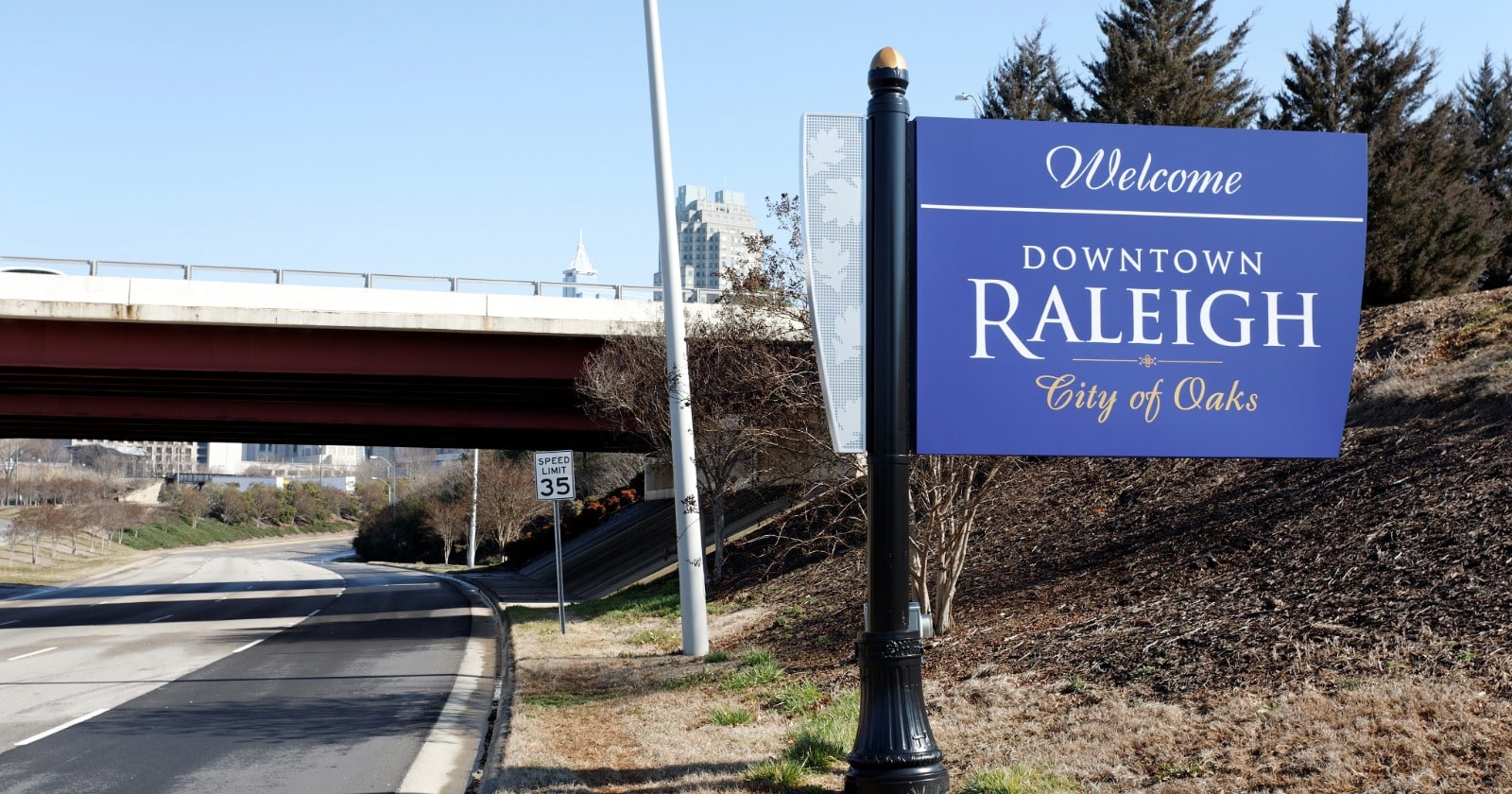
8. Raleigh, North Carolina
Raleigh has been one of the most consistent growth stories in the Southeast for 30 years and shows no signs of slowing. At 478,612 residents it's the largest city on this list and growing at 73 percent since 2020, a remarkable rate for a city of that size. The Research Triangle anchors a tech and life sciences economy that keeps pulling educated workers from the Northeast and Midwest. Median household income of $85,395 is solid, and the combination of a growing job base, a major university system, and housing prices well below comparable Northern cities has made Raleigh a reliable destination for people looking to relocate without sacrificing career opportunities.
9. Austin, Texas
At nearly a million residents and 48 percent growth since 2020, Austin has crossed firmly into major city territory. The tech industry presence, anchored by Tesla, Apple, Oracle, and dozens of startups that relocated from California, has pushed median household income to $93,658 while also pushing home prices into a range that has started to make the city feel less affordable than it once did. Austin's growth rate has moderated since the 2021 to 2022 peak, and the city has seen some net out-migration of longer-term residents priced out of the market. But it remains one of the most economically dynamic cities in the country, and its population trajectory is still strongly positive.
10. Midland, Texas
Midland, like Williston, is an energy city. The Permian Basin is the most productive oil-producing region in the United States, and Midland sits at its center. Population has grown 41.7 percent since 2020 to reach 134,610, and median household income of $89,585 reflects the combination of oil field labor wages and the professional and managerial class that runs the energy companies headquartered there. Midland's growth is more stable than Williston's because the Permian Basin has a longer production history and lower cost of extraction, meaning the local economy is less sensitive to oil price swings than the Bakken. It is still a boom-and-bust economy by nature, but the booms have been longer and the busts shallower in recent cycles.
What these cities have in common
Look across the list and a few patterns emerge. Eight of the ten are in Texas, Arizona, Idaho, Montana, or North Carolina, which means the Sun Belt and Mountain West continue to dominate American population growth. Seven of the ten have median household incomes above $85,000, which means these aren't just cheap-land cities absorbing low-income migration. They're pulling middle and upper-middle class households who are trading expensive coastal markets for space, affordability, and in some cases better schools. The two exceptions, Williston and Midland, are energy cities with their own distinct economic logic.
You can explore the full rankings and compare any of these cities directly on the fastest-growing cities ranking page, or put any two of them side by side using the Compare tool.
Add CensusEasy as a preferred source on Google to see our stories first.
 BOOMTOWNS
The Fastest-Growing Counties in Texas, 2024 to 2025
Texas added 391,243 residents in a single year. Harris County led in raw numbers, but the fastest growth was in the exurban collar counties, with Kaufman County landing near the top of both the numeric and percentage rankings.
 BOOMTOWNS
Houston Overtakes Dallas as America's Fastest-Growing Metro
The Houston metro added 126,720 people from 2024 to 2025, the most of any U.S. metro area and just ahead of Dallas-Fort Worth, according to new Census Bureau estimates.
 BOOMTOWNS
Atlanta vs. Charlotte: The Southeast's Two Biggest Growth Stories
Atlanta and Charlotte are the two cities that defined the Southeast's rise as an economic region over the past 35 years. Both started the 1990s as mid-sized Southern cities with regional profiles and have grown into nationally significant metros with Fortune 500 headquarters, major financial sectors, and...
Which city is currently growing the fastest in America?
Maricopa, Arizona has posted one of the most explosive long-term growth rates in the country over the past two decades.
Why are so many fast-growing cities located in the Sun Belt?
Lower housing costs, warmer climates, job growth, and abundant developable land continue attracting migrants from higher-cost regions.
What makes Frisco, Texas different from other boomtown suburbs?
Frisco evolved into a major destination city with corporate campuses, sports infrastructure, and extremely high household incomes.